

The Importance of Website Security in Modern Web Development
Introduction
Website security has become one of the most important responsibilities for every modern business. Customers trust websites with personal information, payment details, and sensitive business data every day. A single security weakness can damage customer confidence, interrupt business operations, and create significant financial losses. This is why following website security best practices is essential for every website, regardless of its size or industry. Strong security protects valuable information while ensuring reliable and trustworthy online experiences.
Why Website Security Matters
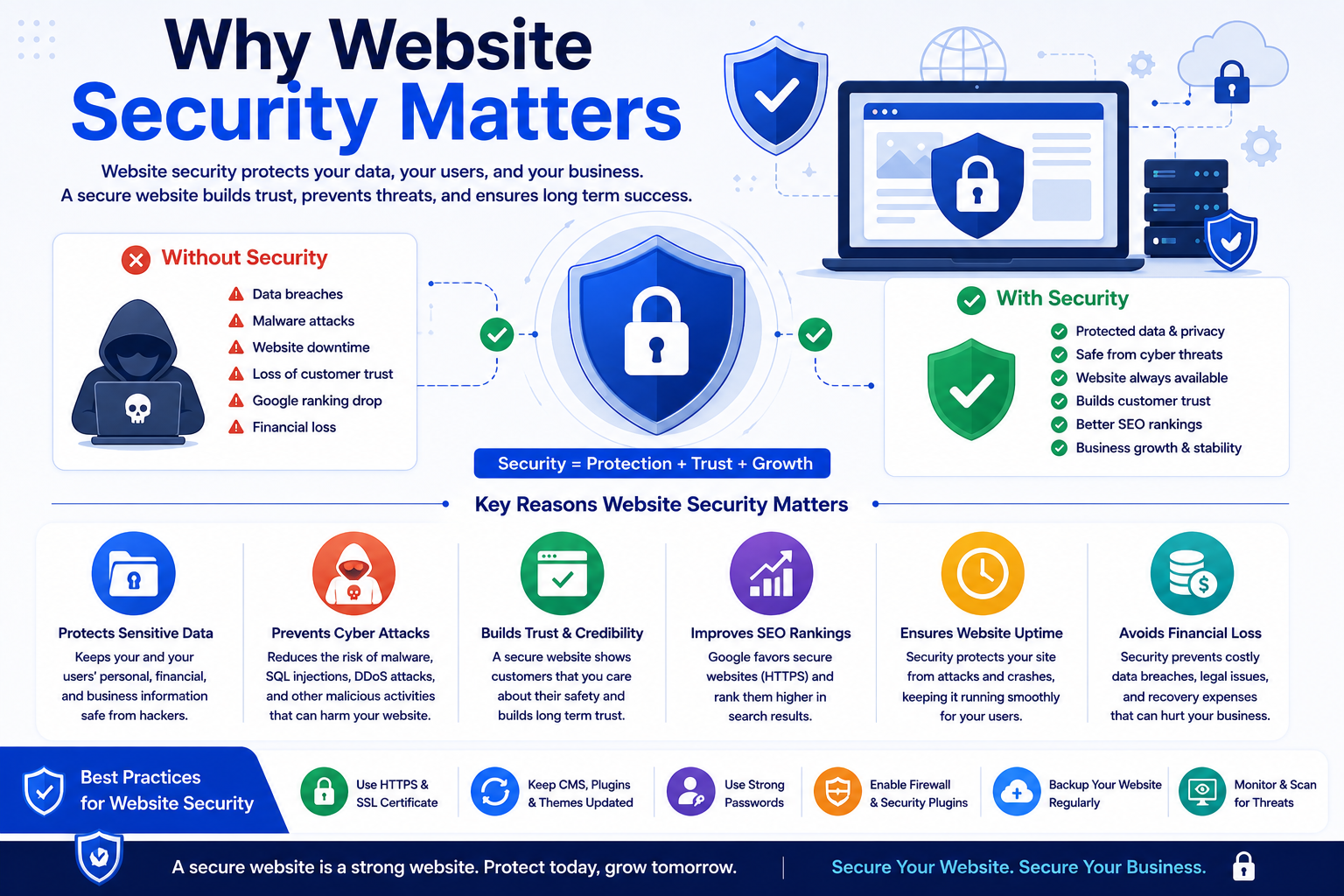
Cyber threats continue evolving as businesses rely more heavily on digital platforms for daily operations. Attackers constantly search for vulnerable websites that contain outdated software, weak authentication, or insecure coding practices.
A secure website protects customer information while maintaining business continuity and brand reputation. Businesses that prioritize security reduce operational risks while building stronger relationships with customers.
Investing in website security best practices is not only a technical decision but also an important business investment.
HTTPS Protects Data During Transmission
HTTPS is one of the most fundamental security features every website should implement. It encrypts information exchanged between visitors and the website, preventing unauthorized interception during transmission.
Without HTTPS, sensitive information such as passwords, payment details, and personal data becomes more vulnerable to cyber attacks. Modern browsers also warn users when websites lack secure connections.
HTTPS improves customer confidence while supporting better search engine visibility.
Secure Authentication Protects User Accounts
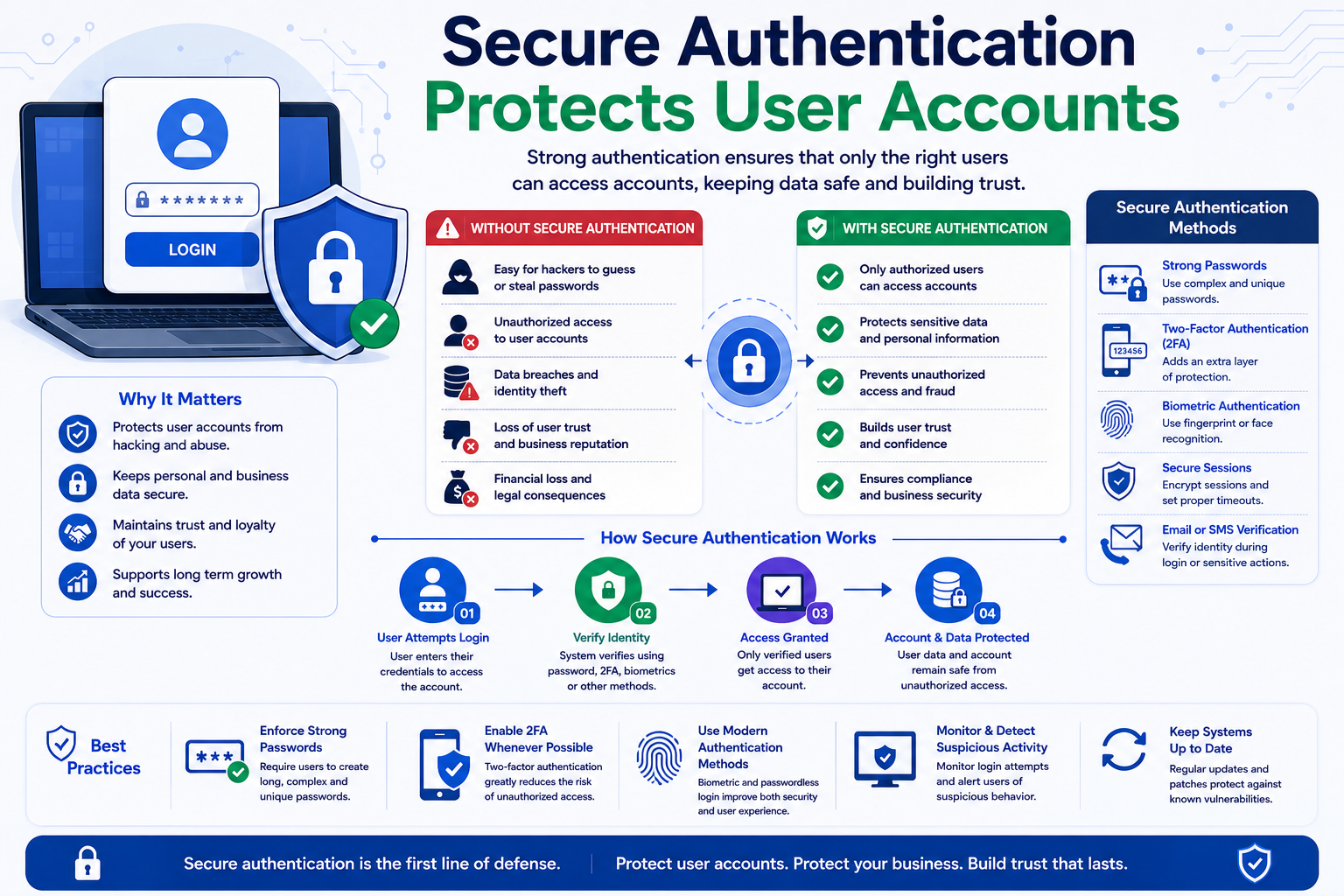
Authentication ensures only authorized users can access protected areas of a website. Weak login systems create opportunities for attackers to compromise customer accounts and sensitive business information.
Modern authentication includes encrypted passwords, secure session management, account lockout protection, and optional multi factor authentication. These security measures significantly reduce unauthorized access risks.
Strong authentication creates safer user experiences while protecting valuable digital assets.
Data Encryption Keeps Information Safe
Encryption converts sensitive information into unreadable data that only authorized systems can access. Even if attackers intercept encrypted information, they cannot easily understand or misuse it.
Businesses should encrypt customer records, payment information, login credentials, and confidential business data. Encryption protects information during both storage and transmission.
Proper encryption remains one of the most important website security best practices for protecting sensitive information.
Input Validation Prevents Malicious Activity
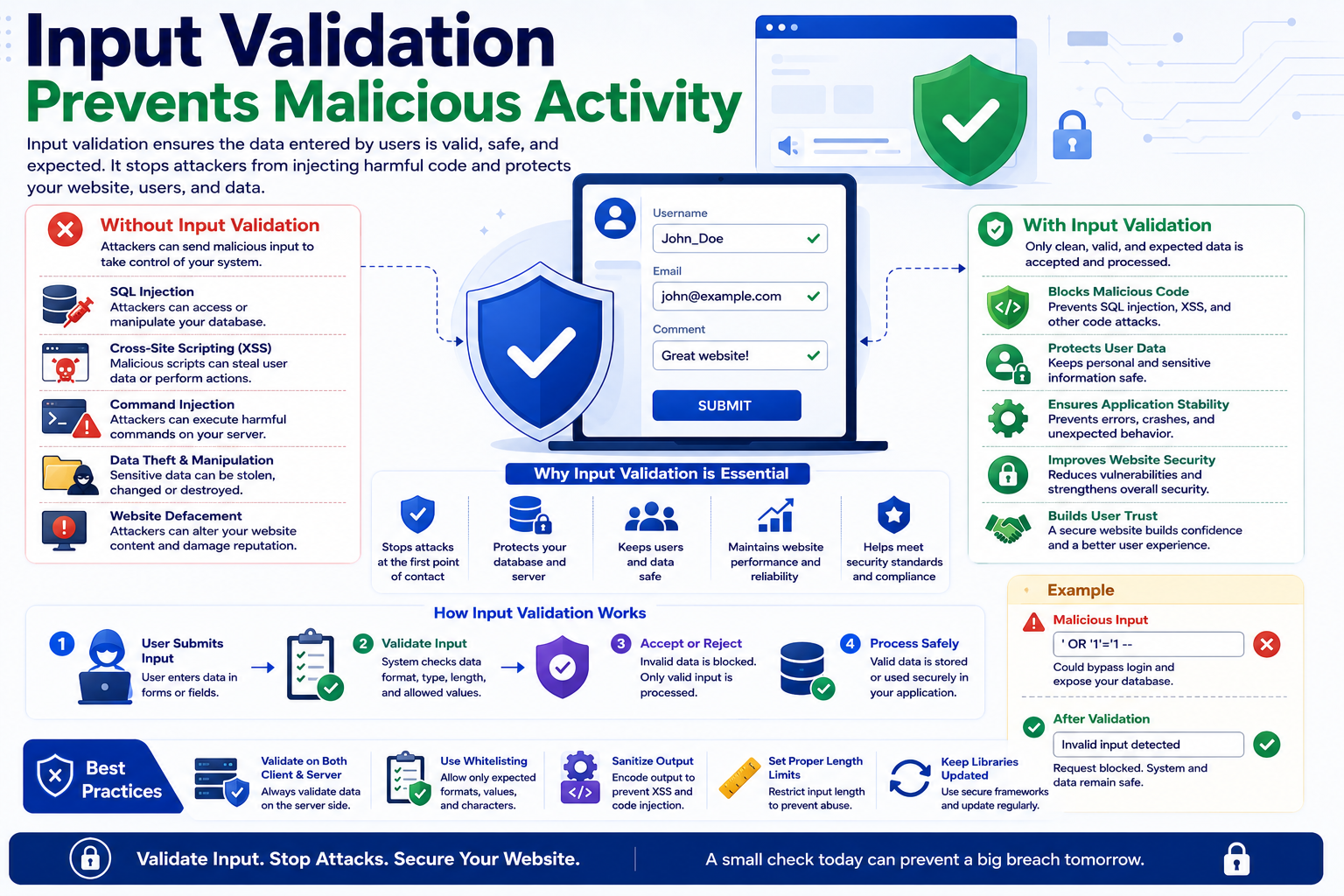
Many website attacks occur because applications accept harmful user input without proper validation. Attackers may attempt to submit malicious code through forms, search fields, or login pages.
Input validation checks every user submission before processing the information. Suspicious or invalid data is rejected before reaching the application or database.
Careful validation strengthens website security while preventing many common cyber attacks.
Preventing SQL Injection Attacks
SQL injection is a common attack method where malicious users attempt to manipulate website databases through insecure input fields. Successful attacks may expose confidential customer information or damage important business records.
Developers prevent SQL injection by using parameterized queries, prepared statements, secure database communication, and proper input validation. These techniques prevent malicious commands from reaching the database.
Protecting databases remains essential for maintaining business continuity and customer trust.
Protecting Against Cross Site Scripting
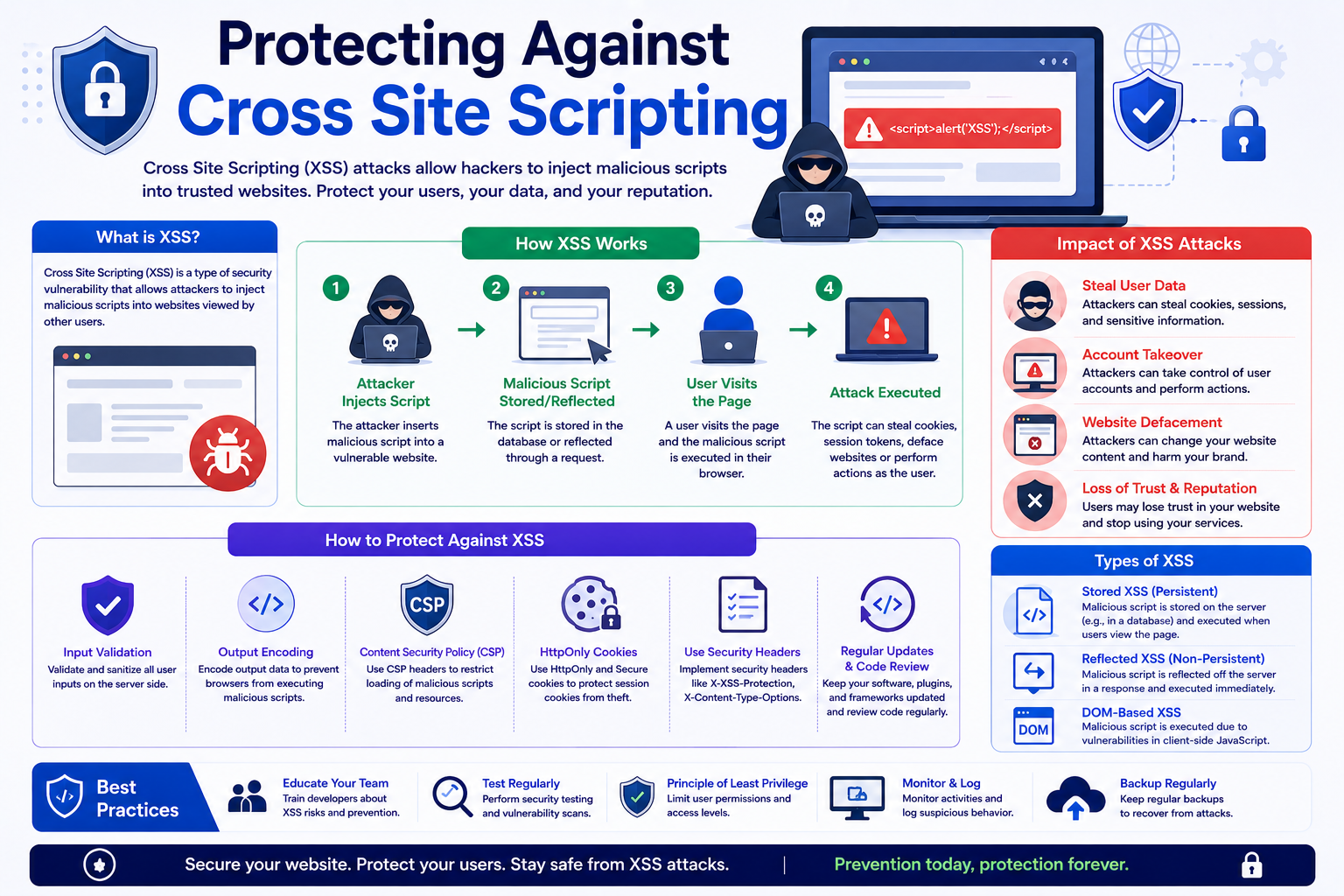
Cross Site Scripting, commonly called XSS, allows attackers to inject malicious scripts into websites viewed by other users. These attacks may steal login credentials, modify website content, or compromise customer sessions.
Developers prevent XSS by validating user input, escaping output correctly, and implementing strong content security policies. Modern development frameworks also provide additional protection mechanisms.
Preventing XSS improves website safety while protecting both businesses and their customers.
Keep Software Updated
Outdated software represents one of the most common causes of website security vulnerabilities. Content management systems, plugins, frameworks, and server software require regular updates to remain protected.
Developers install security patches promptly after they become available. Regular updates reduce known vulnerabilities before attackers can exploit them.
Maintaining updated software remains an essential part of long term website security.
Regular Website Backups
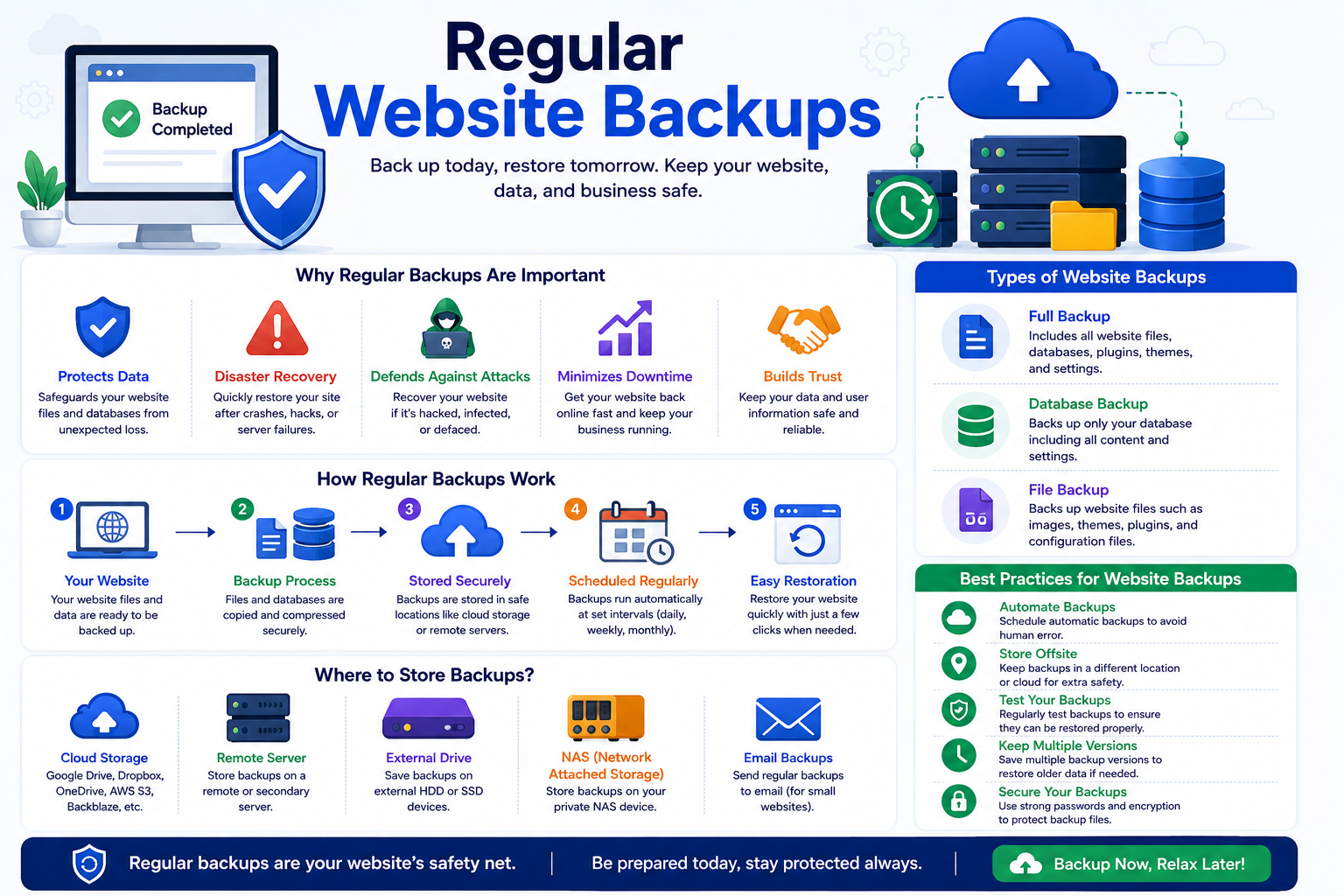
Even highly secure websites should maintain reliable backup strategies because unexpected problems can still occur. Hardware failures, software errors, accidental deletions, or cyber attacks may disrupt normal operations.
Regular backups allow businesses to restore websites quickly while minimizing downtime and data loss. Backup systems should store copies securely in multiple locations.
Reliable backup strategies provide valuable protection against unexpected technical incidents.
Monitor Website Activity
Continuous monitoring helps businesses identify unusual website behavior before security incidents become more serious. Monitoring systems detect failed login attempts, suspicious traffic, unexpected file changes, and unusual application activity.
Early detection allows developers to investigate problems quickly while preventing larger security breaches. Ongoing monitoring also improves overall website reliability.
Businesses benefit from greater confidence because potential risks receive immediate attention.
Employee Awareness Supports Website Security
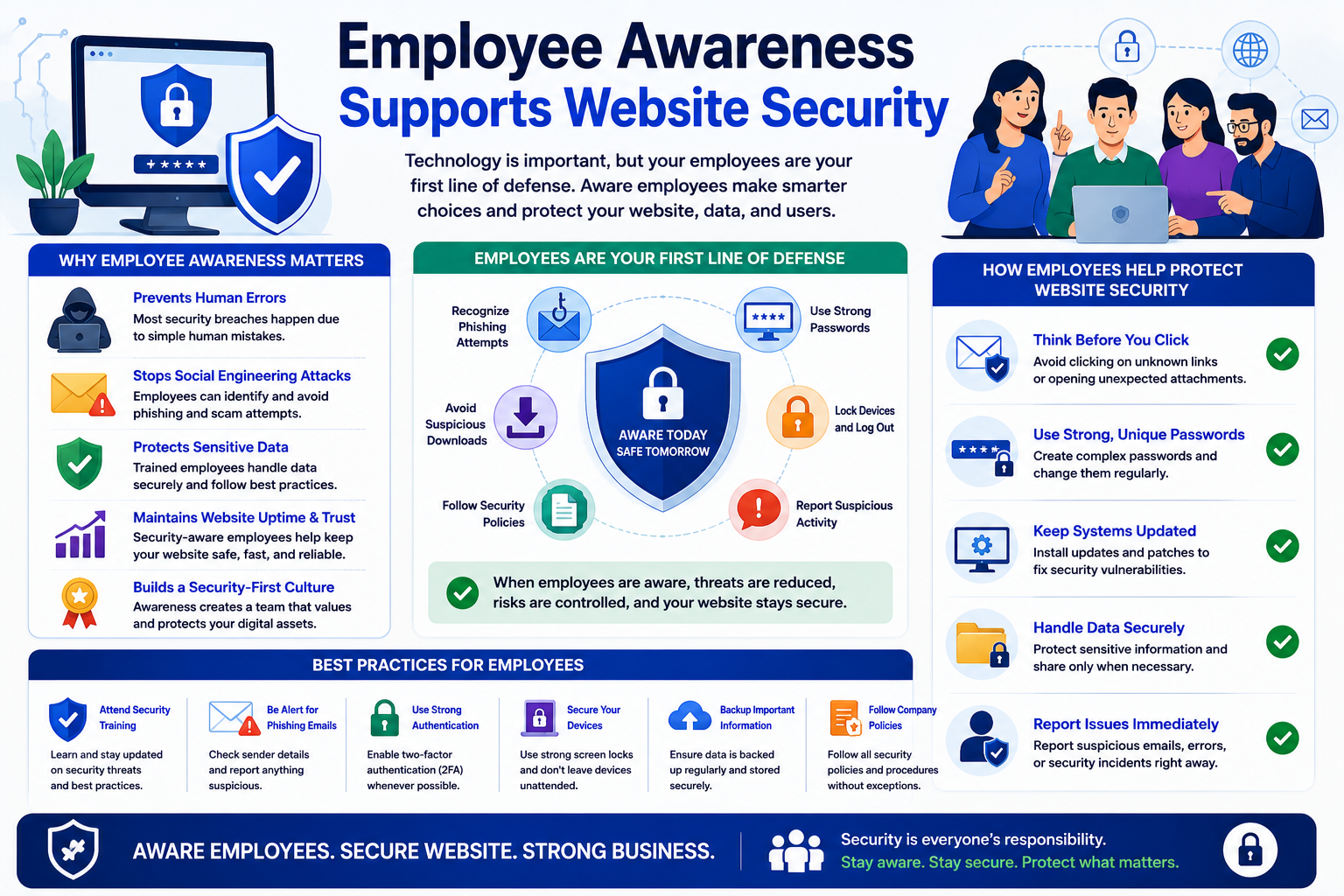
Technology alone cannot protect websites without responsible user behavior. Employees managing website content and administrative accounts should understand basic security practices.
Strong passwords, secure login habits, phishing awareness, and responsible account management reduce unnecessary security risks. Regular training strengthens organizational security across every department.
Security becomes more effective when both technology and people work together.
How Abubakar Builds Secure Websites
Abubakar develops websites with security integrated into every stage of the development process. Every project includes secure authentication, encrypted communication, protected databases, input validation, and modern coding standards.
Regular software updates, performance monitoring, secure hosting recommendations, and backup strategies help maintain long term website reliability. Security testing also identifies vulnerabilities before websites become publicly available.
Every website is designed to protect business operations while providing customers with safe and trustworthy online experiences.
Benefits of Following Website Security Best Practices
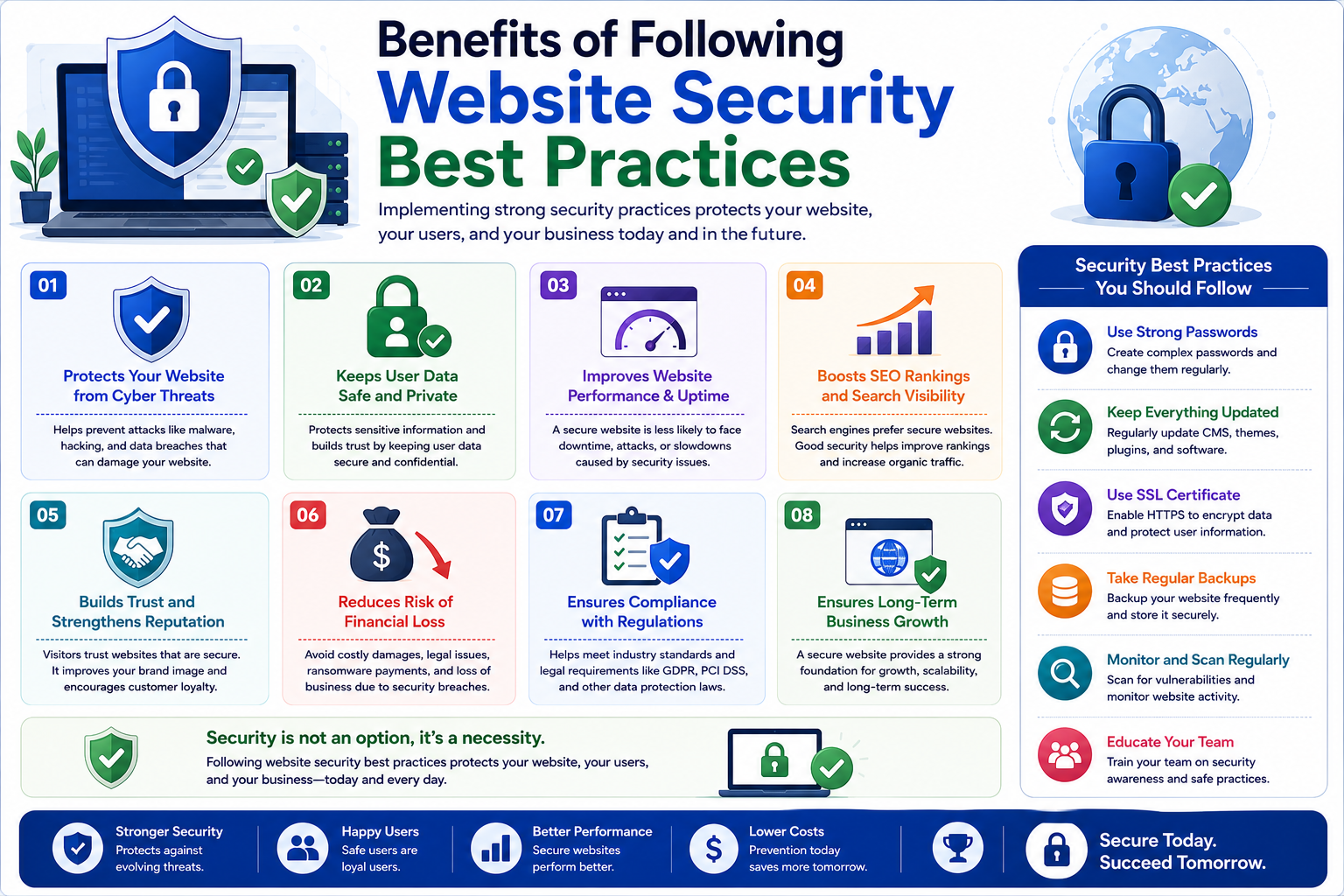
Businesses implementing professional security measures enjoy several important long term advantages.
- Protect customer information through secure encryption.
- Reduce cyber attack risks with secure authentication.
- Prevent database attacks using proper input validation.
- Improve customer trust through reliable security practices.
- Reduce downtime with regular backup strategies.
- Maintain compliance through secure development standards.
- Protect long term business reputation and digital assets.
These benefits demonstrate why website security best practices remain essential for every modern website.
Conclusion
Website security is no longer optional because businesses handle increasing amounts of valuable customer information every day. HTTPS, secure authentication, encryption, input validation, SQL injection prevention, XSS protection, software updates, and reliable backups all contribute to stronger digital security.
Businesses following website security best practices create safer online experiences while protecting their reputation, customers, and future growth. Investing in professional security provides lasting value for every website and web application.
Make Your Website Secure with Professional Development
Protect your business with a website built using modern security standards and proven development practices. Abubakar develops secure websites that combine strong authentication, encrypted communication, reliable backups, and advanced protection against common cyber threats. Whether you need a new website or want to improve an existing platform, every solution is designed for long term security and performance. Contact Abubakar today and make your website secure with professional development.
Meta Title:Website Security Best Practices | Protect Your Business Website