
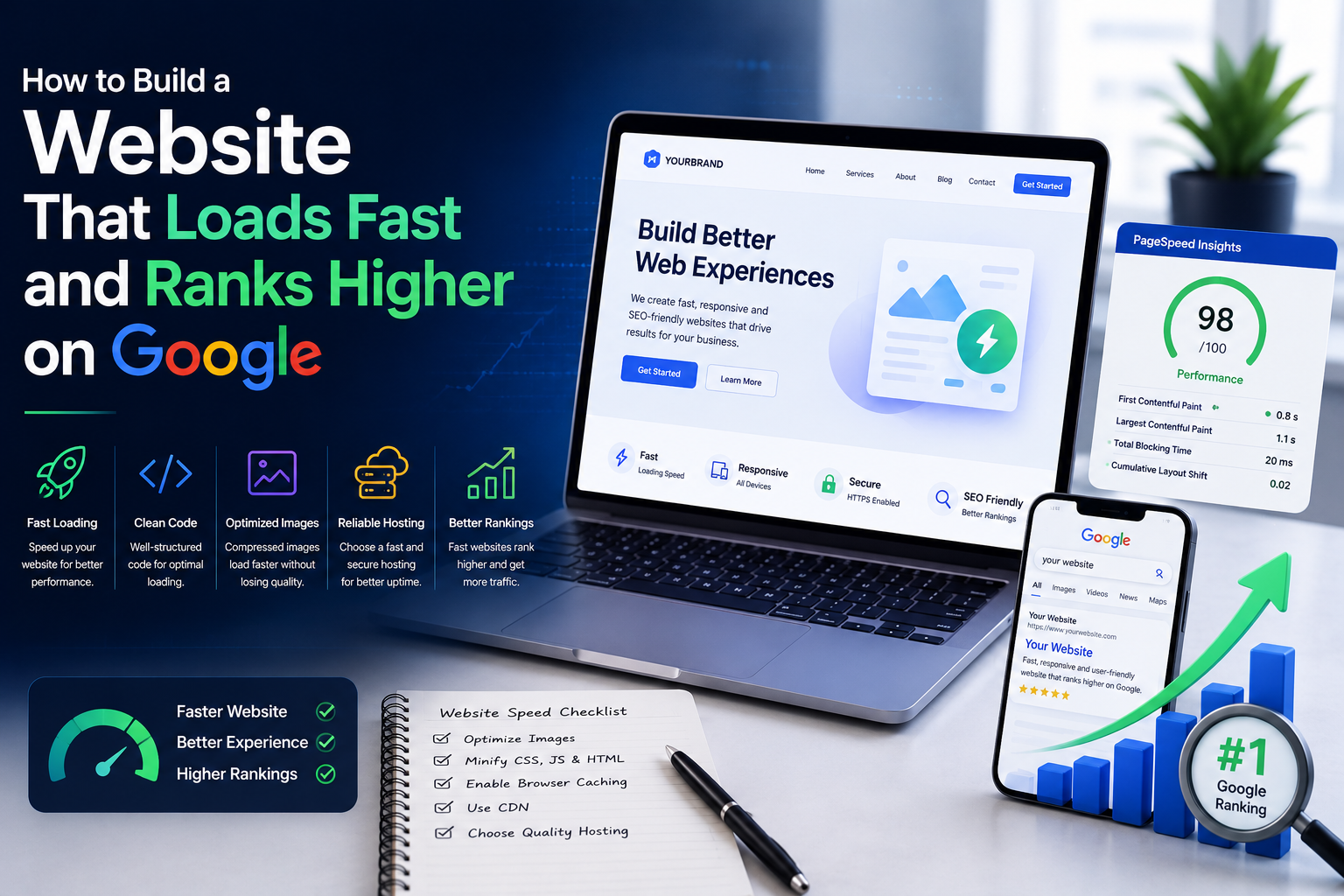
How to Build a Website That Loads Fast and Ranks Higher on Google
Introduction
Website speed has become one of the most important factors influencing online business success. Visitors expect pages to load quickly, regardless of the device or internet connection they use. Slow websites frustrate users, increase bounce rates, and reduce conversion opportunities. Search engines also reward websites that deliver faster and smoother browsing experiences. This is why fast loading website SEO has become an essential part of modern web development. Optimizing website performance improves user satisfaction while increasing visibility in search engine results.
Why Website Speed Matters
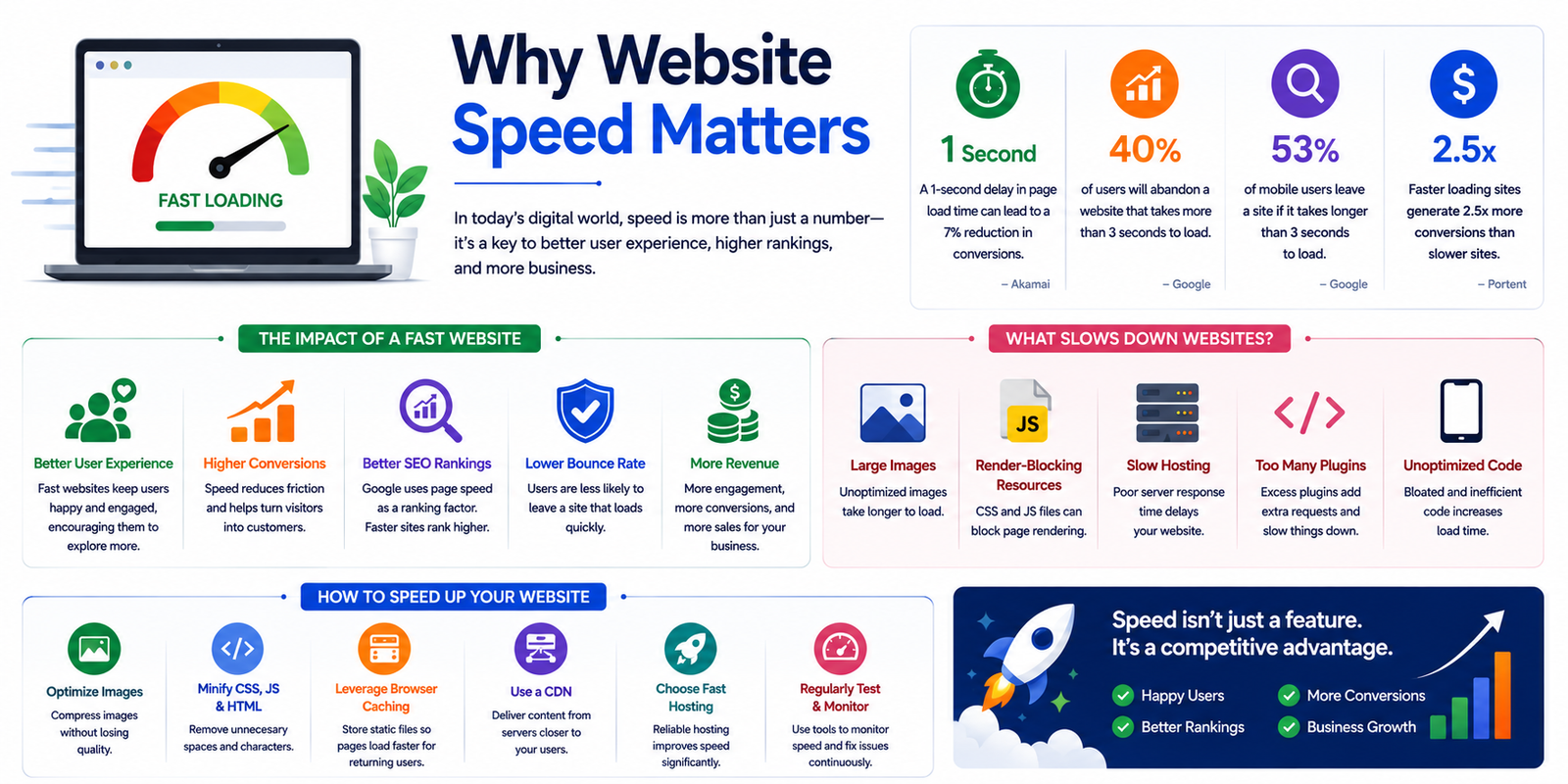
A fast website creates positive first impressions and encourages visitors to continue exploring your content. When pages load quickly, users remain engaged and are more likely to complete valuable actions such as making purchases or submitting inquiries.
Slow websites often lose potential customers because users expect immediate access to information. Every unnecessary delay increases the likelihood of visitors leaving before interacting with important content.
Businesses investing in fast loading website SEO strengthen customer satisfaction while improving long-term digital performance.
Website Speed and Google Rankings
Google considers page experience and website performance when evaluating search rankings. Faster websites provide better user experiences, making them more attractive to both visitors and search engines.
Although quality content remains essential, technical performance also influences search visibility. Optimized websites improve crawling efficiency while reducing loading delays across different devices.
Combining strong content with excellent website speed creates better opportunities for higher search engine rankings.
Compress Images Without Reducing Quality
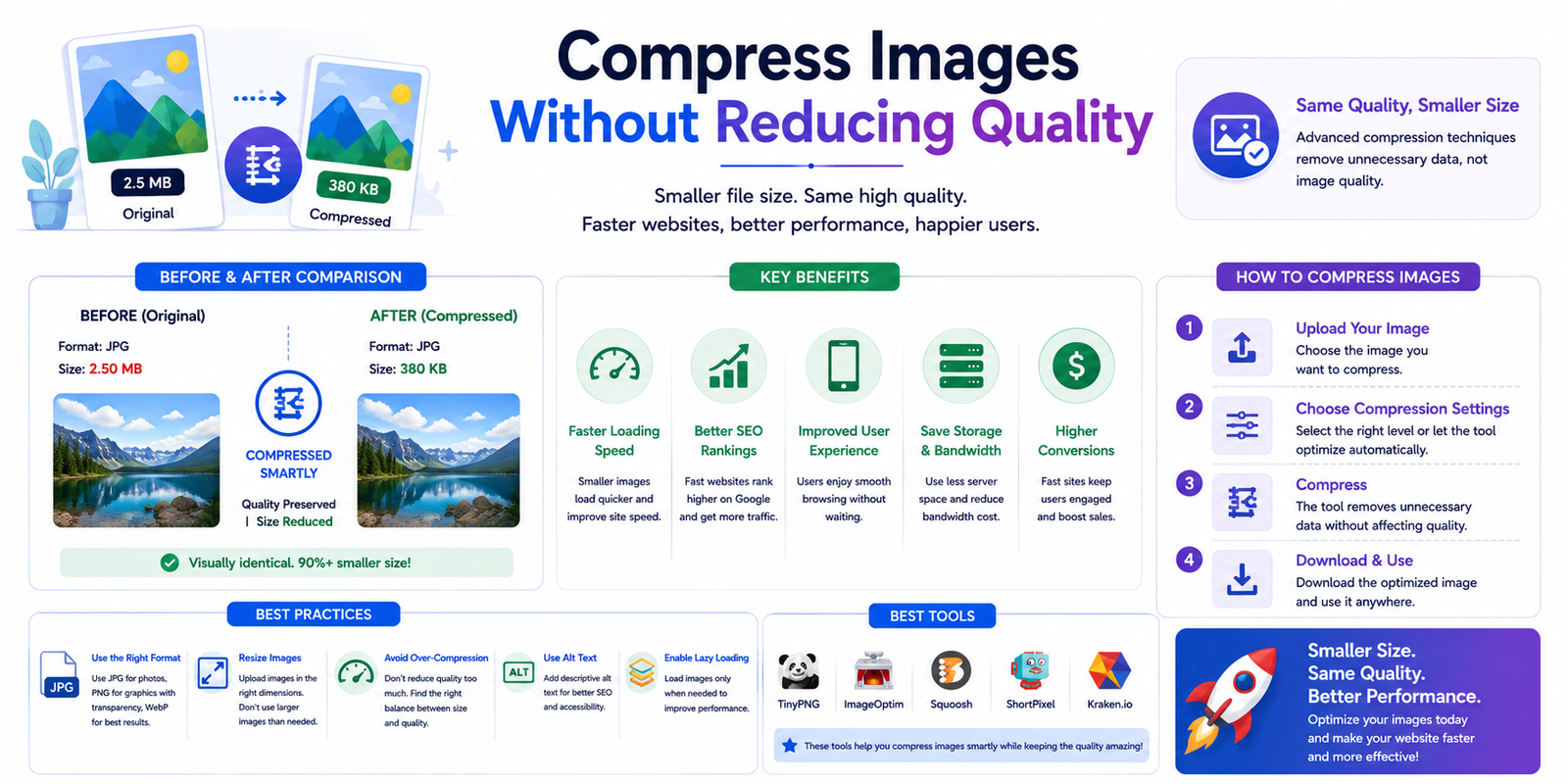
Images often represent the largest files on a website and significantly affect loading speed. Large, unoptimized images increase page weight and slow down website performance.
Image compression reduces file sizes while maintaining excellent visual quality. Modern image formats and responsive image techniques further improve loading efficiency across different devices.
Businesses should optimize every image before publishing content to support better website performance.
Minify HTML, CSS, and JavaScript
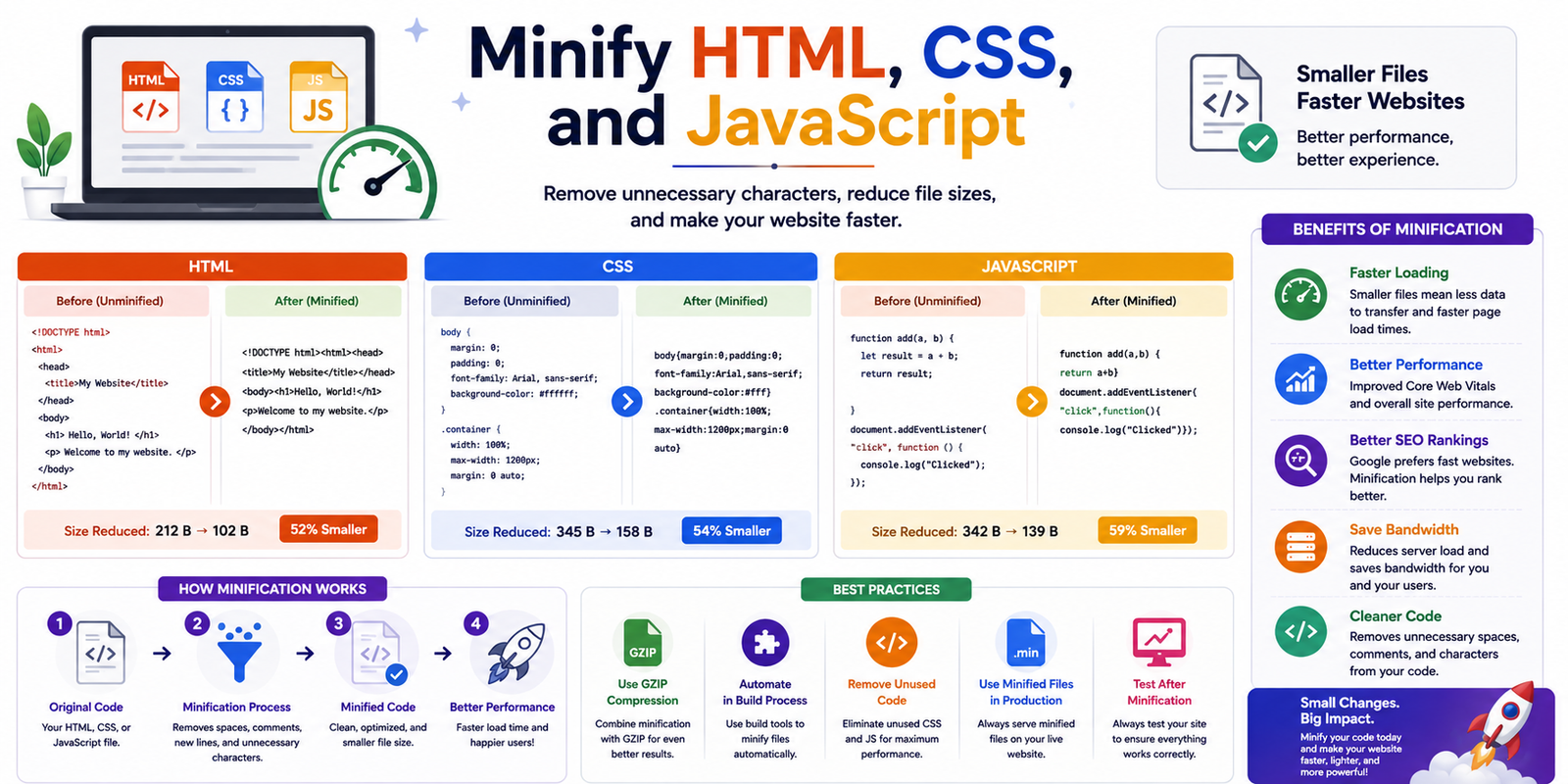
Website code often contains unnecessary spaces, comments, and formatting that increase file sizes. Although these elements help developers during development, they are unnecessary for live websites.
Code minification removes extra characters without affecting website functionality. Smaller files download more quickly, reducing overall page loading times.
Efficient code contributes directly to stronger fast loading website SEO performance.
Use Browser Caching
Browser caching allows visitors to store frequently used website resources on their devices after their first visit. Returning visitors load pages much faster because many files are already available locally.
Caching reduces server requests while improving browsing performance across multiple pages. Businesses also reduce hosting resource usage because fewer files require repeated downloads.
Proper caching strategies improve both customer experiences and website efficiency.
Content Delivery Networks Improve Performance
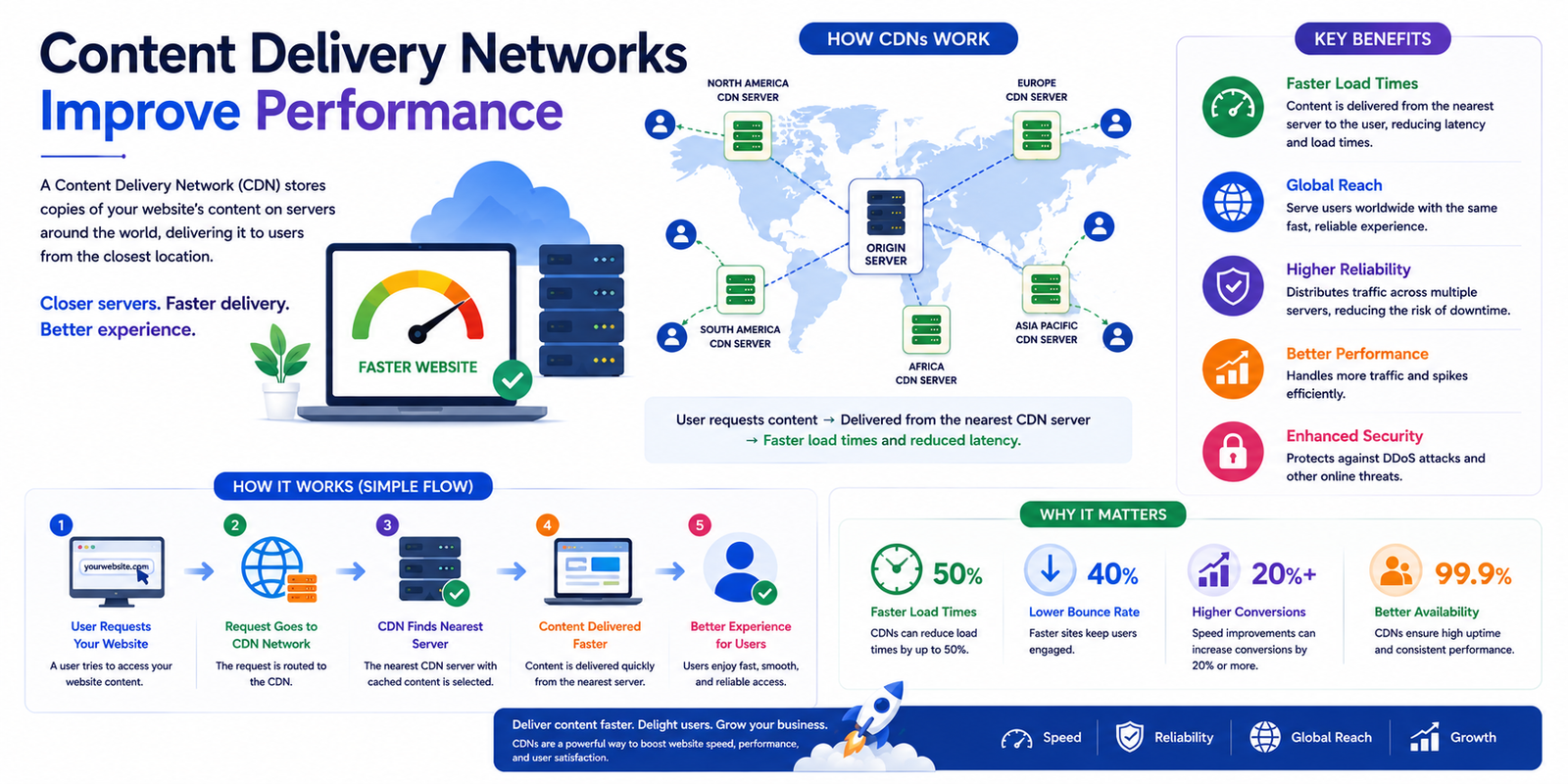
A Content Delivery Network, commonly called a CDN, stores website resources on multiple servers located around the world. Visitors receive files from the server closest to their geographic location.
This approach reduces loading delays because information travels shorter distances before reaching users. Websites serving international audiences especially benefit from CDN implementation.
Content delivery networks improve reliability while supporting faster website performance globally.
Lazy Loading Reduces Initial Load Time
Lazy loading delays the loading of images and other media until visitors actually scroll to those sections. Instead of downloading every file immediately, the website loads content only when needed.
This technique significantly improves initial page speed because fewer resources load during the first visit. Visitors experience faster access to important information without unnecessary waiting.
Lazy loading creates smoother browsing experiences while reducing bandwidth consumption.
Optimize Your Database
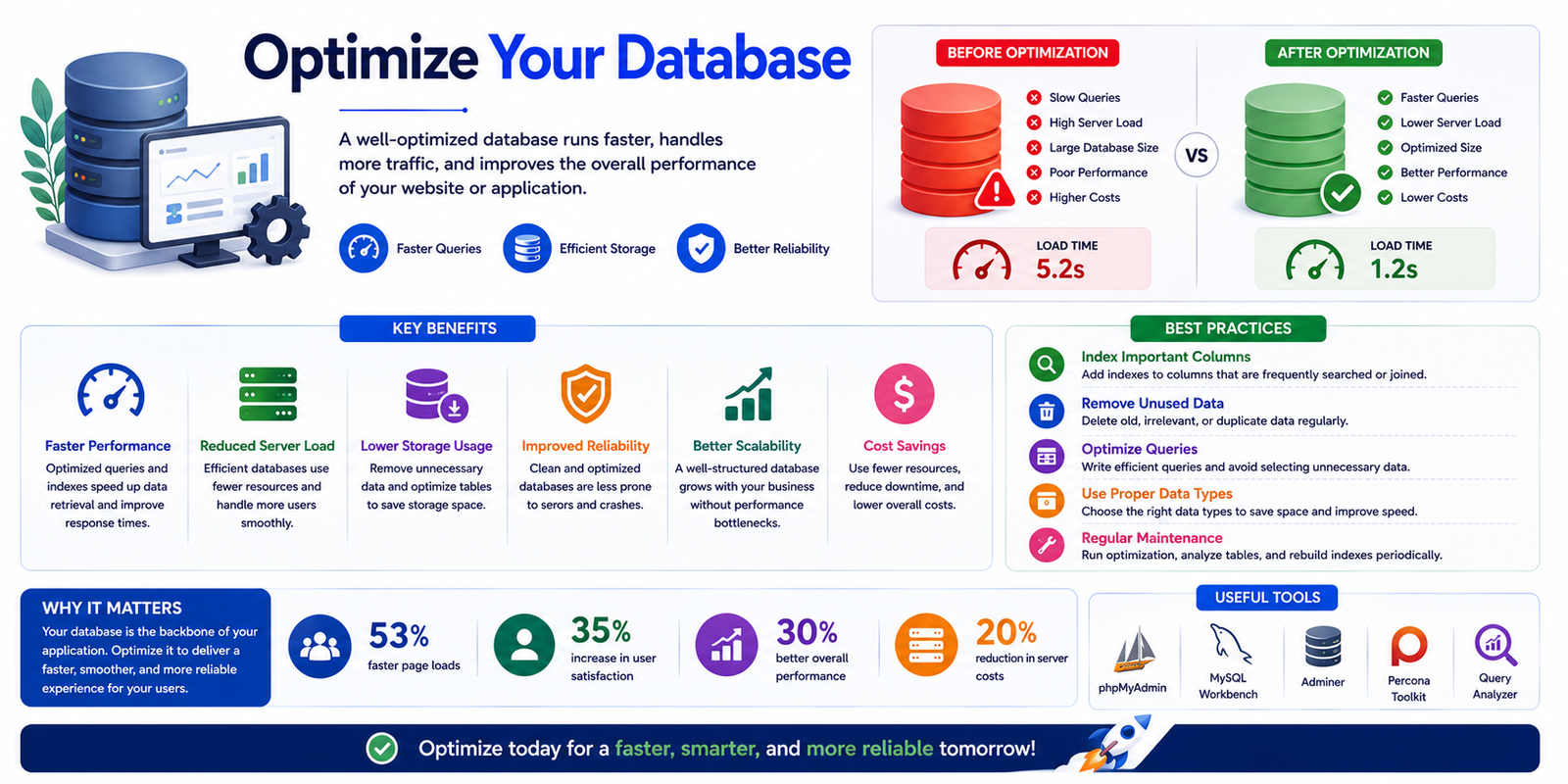
Dynamic websites depend on databases to store products, customer information, blog posts, and other important content. Poorly maintained databases gradually reduce website performance over time.
Database optimization removes unnecessary data, improves queries, and organizes stored information more efficiently. Faster database responses contribute to quicker page generation and improved user experiences.
Businesses using content management systems should regularly maintain their databases for consistent performance.
Reduce HTTP Requests
Every webpage requires multiple requests to load images, stylesheets, scripts, fonts, and other resources. Too many requests increase loading times because browsers must retrieve additional files.
Developers reduce HTTP requests by combining files, removing unnecessary resources, and simplifying website architecture. These improvements allow browsers to display pages more efficiently.
Reducing unnecessary requests strengthens website speed without affecting functionality.
Choose Reliable Website Hosting
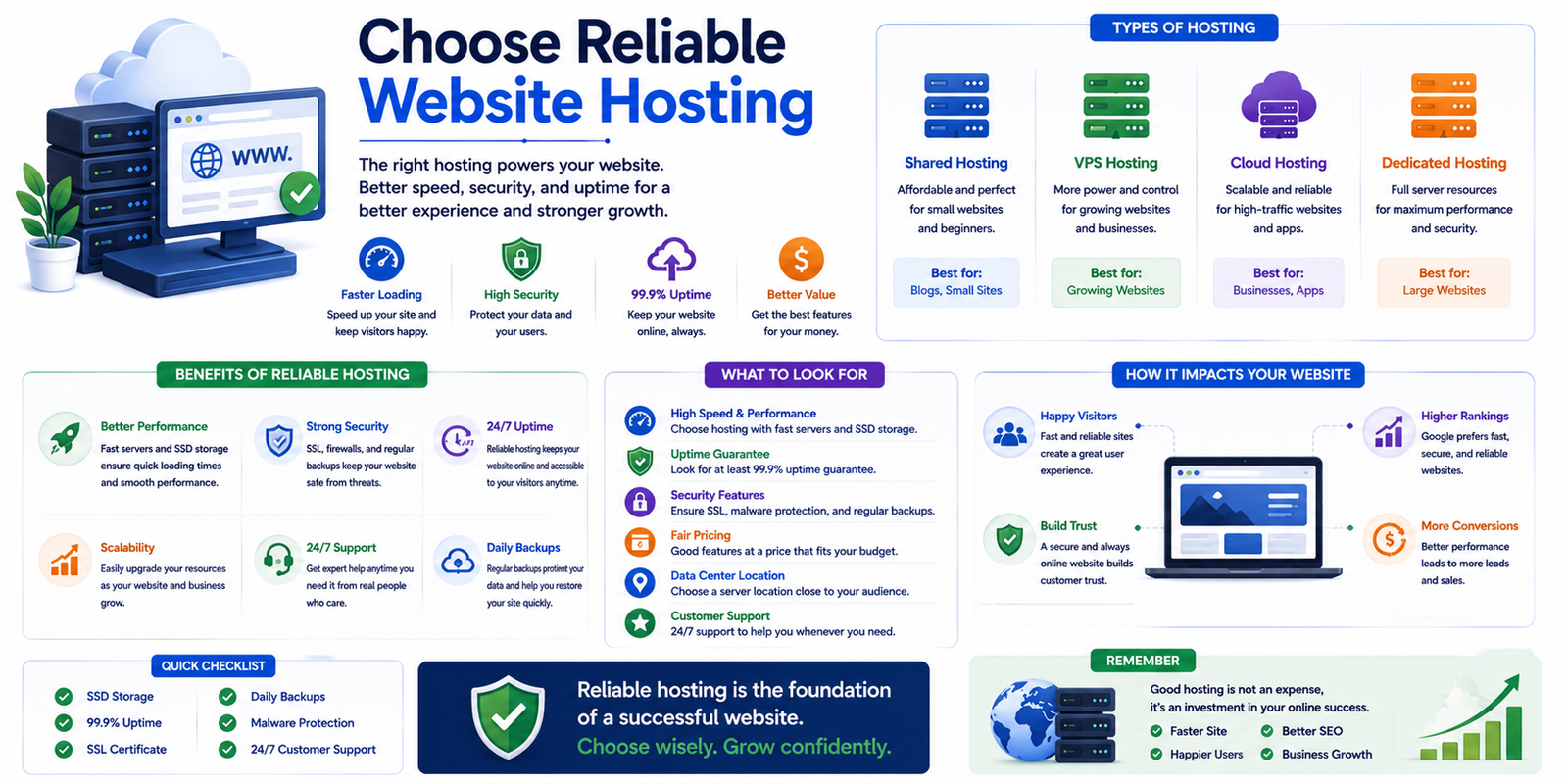
Hosting quality directly affects website speed, security, and availability. Even well optimized websites perform poorly when hosted on unreliable or overloaded servers.
Professional hosting providers offer better infrastructure, stronger security, faster storage technology, and improved server performance. Businesses benefit from greater reliability and consistent loading speeds.
Selecting appropriate hosting remains an important investment for long-term website success.
Mobile Performance Is Essential
Most internet users now access websites through smartphones and tablets instead of desktop computers. Mobile visitors expect websites to load quickly while providing smooth navigation across smaller screens.
Responsive design, optimized images, efficient coding, and lightweight resources improve mobile performance significantly. Better mobile experiences also support stronger search engine visibility.
Modern fast loading website SEO strategies always prioritize mobile optimization.
How Abubakar Optimizes Website Performance
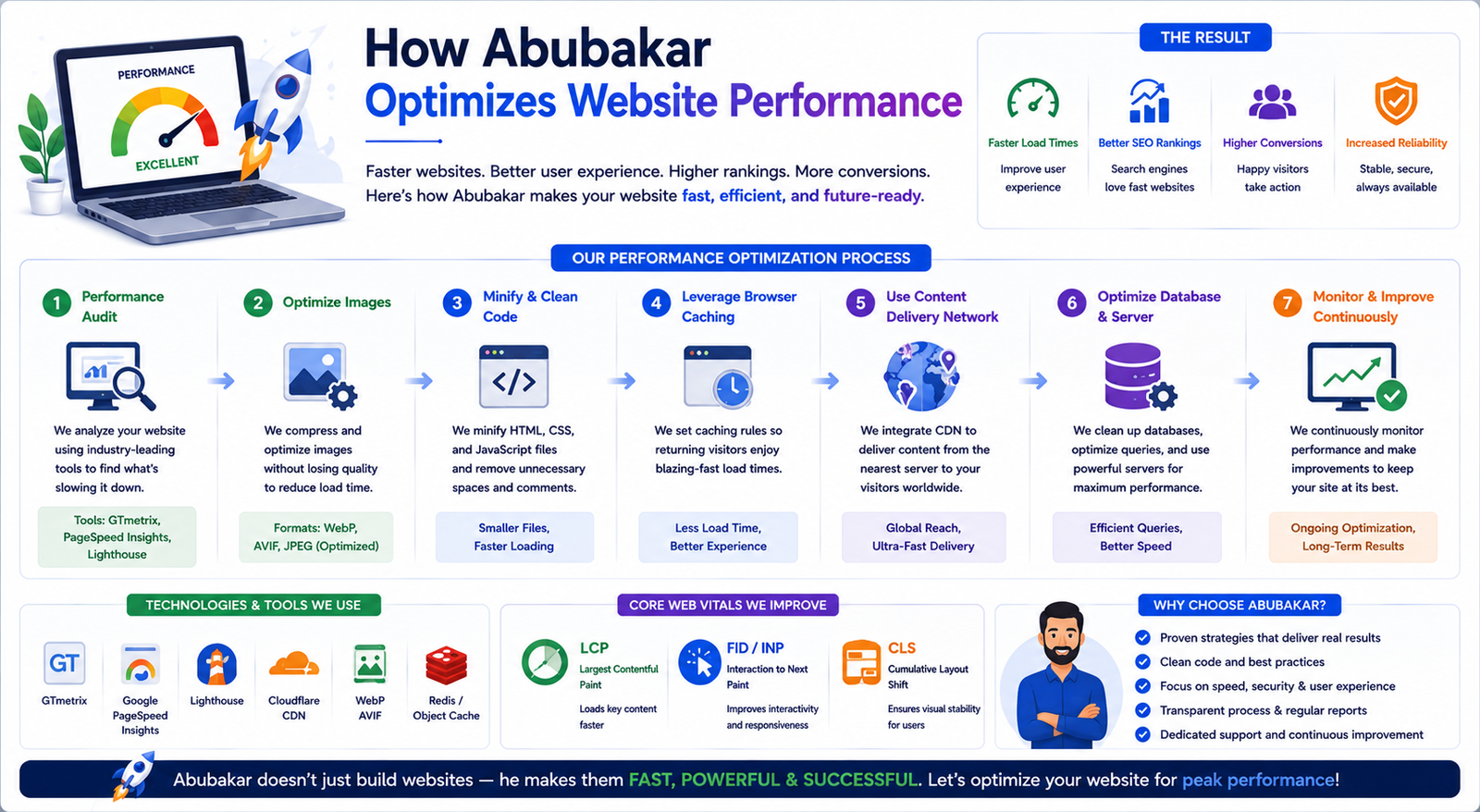
Abubakar develops websites with speed and performance as core priorities from the beginning of every project. Every website undergoes careful optimization before launch to ensure fast loading across different devices.
Image compression, code minification, browser caching, CDN integration, lazy loading, database optimization, and responsive design are implemented according to project requirements. Continuous testing helps identify additional opportunities for performance improvements.
Every optimization supports better user experiences while strengthening search engine performance and business growth.
Benefits of a Fast Loading Website

Businesses investing in website performance optimization enjoy several measurable long-term advantages.
- Improve user experience through faster page loading.
- Increase search engine visibility with better technical performance.
- Reduce bounce rates by keeping visitors engaged.
- Improve conversion rates with smoother customer journeys.
- Support mobile users with responsive optimization.
- Reduce server resource usage through efficient caching.
- Strengthen customer trust with reliable website performance.
These advantages demonstrate why fast loading website SEO remains essential for businesses competing online.
Conclusion
Website speed influences customer satisfaction, search engine visibility, and overall business success. Performance optimization techniques such as image compression, code minification, browser caching, CDN integration, lazy loading, and database optimization create faster and more reliable websites.
Businesses prioritizing fast loading website SEO improve user experiences while increasing opportunities for higher Google rankings and stronger online growth. Investing in website performance creates lasting value for both businesses and their customers.
Speed Up Your Website Today
Is your website losing visitors because of slow loading speeds? Abubakar builds high performance websites that combine technical optimization with outstanding user experiences. Whether you need performance improvements for an existing website or a completely new project, every solution is designed for speed, search visibility, and long-term success. Contact Abubakar today and speed up your website today.
Meta Title:Fast Loading Website SEO | Improve Speed and Google Rankings
Meta Description:Learn how fast loading website SEO improves Google rankings with image compression, caching, CDN, lazy loading, code optimization, and better user experience.