
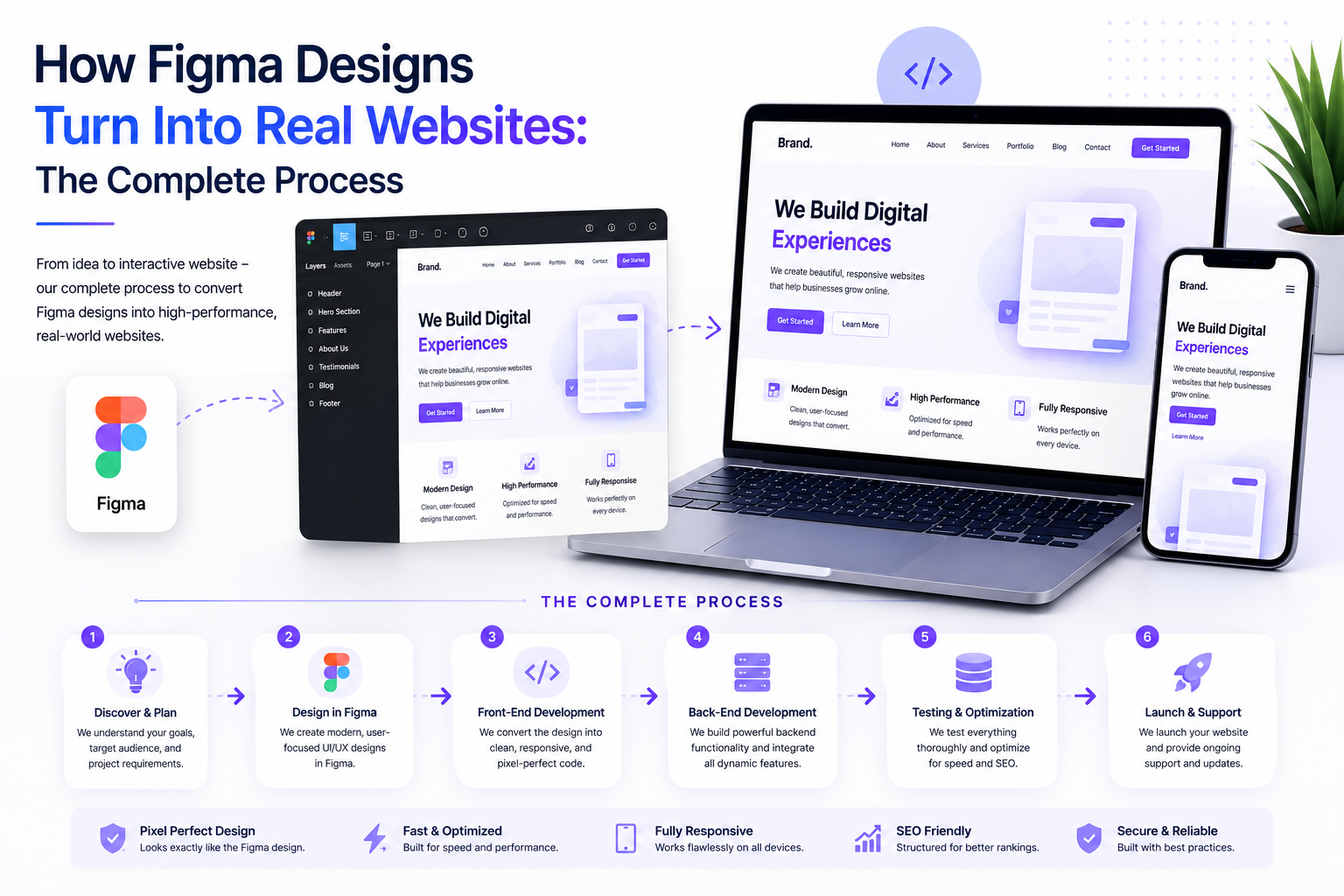
How Figma Designs Turn Into Real Websites: The Complete Process
Introduction
Every successful website begins with a carefully planned design before any development work starts. A visual design allows businesses to review layouts, branding, navigation, and user experience before developers write a single line of code. This approach reduces misunderstandings while creating smoother collaboration between designers, developers, and clients. Understanding the Figma to website development process helps businesses appreciate how professional websites are built from concept to launch. A structured workflow ensures every design detail becomes a functional and responsive digital experience.
What Is Figma?
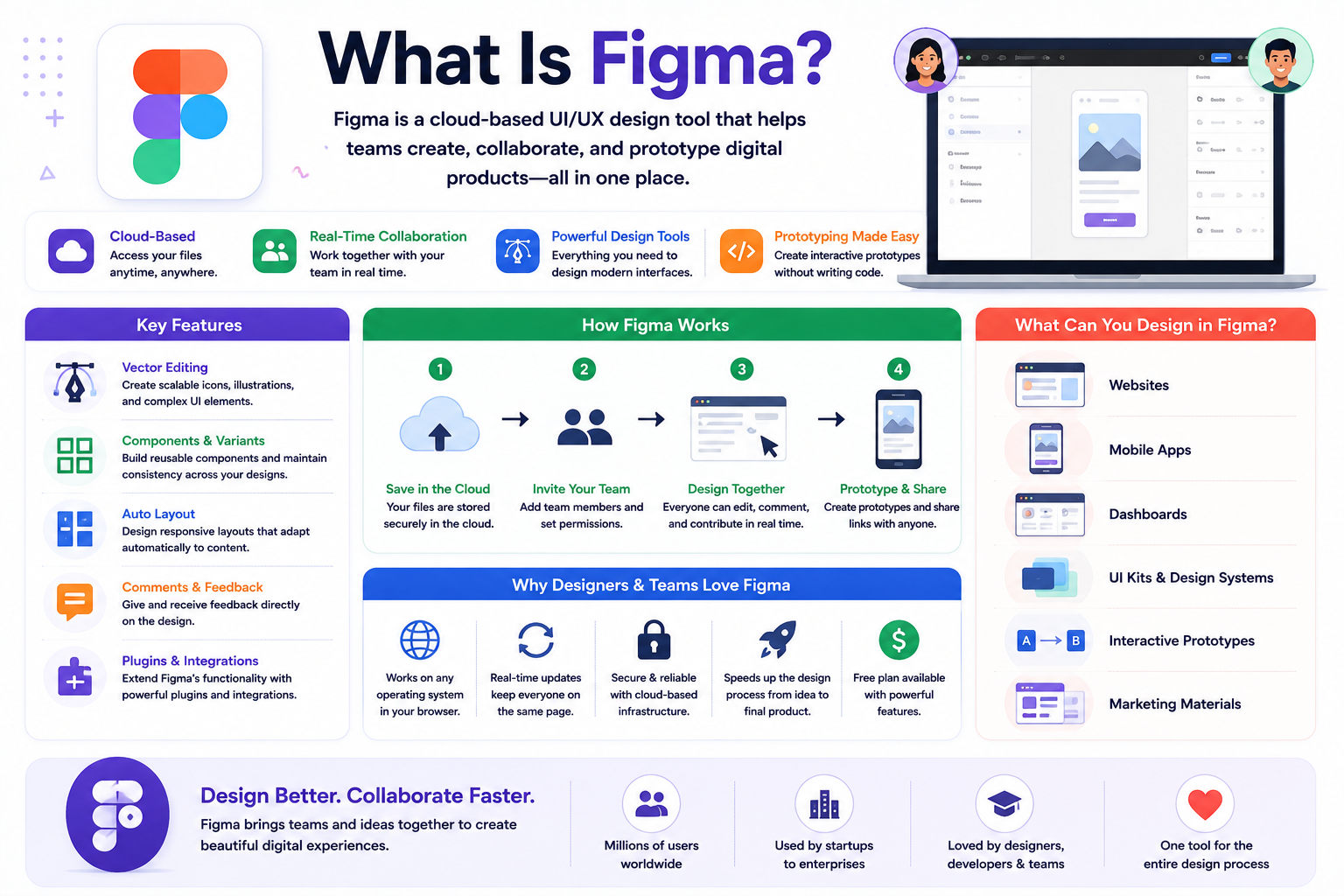
Figma is a cloud based design platform used for creating website layouts, mobile interfaces, prototypes, and complete design systems. Designers use Figma to visualize every page before development begins.
The platform allows teams to collaborate in real time while sharing feedback directly within design files. Clients can review proposed layouts and request changes before coding starts.
Figma helps reduce development mistakes because everyone works from the same approved design.
Why Design Comes Before Development
Building a website without a complete design often creates confusion, delays, and unnecessary revisions. Developers need clear visual guidance before implementing layouts and functionality.
Designing first allows businesses to review branding, navigation, typography, colors, spacing, and user experience before technical development begins. Any improvements can be made quickly without rewriting code.
Following the Figma to website development process creates better communication while reducing project risks.
Understanding Client Requirements
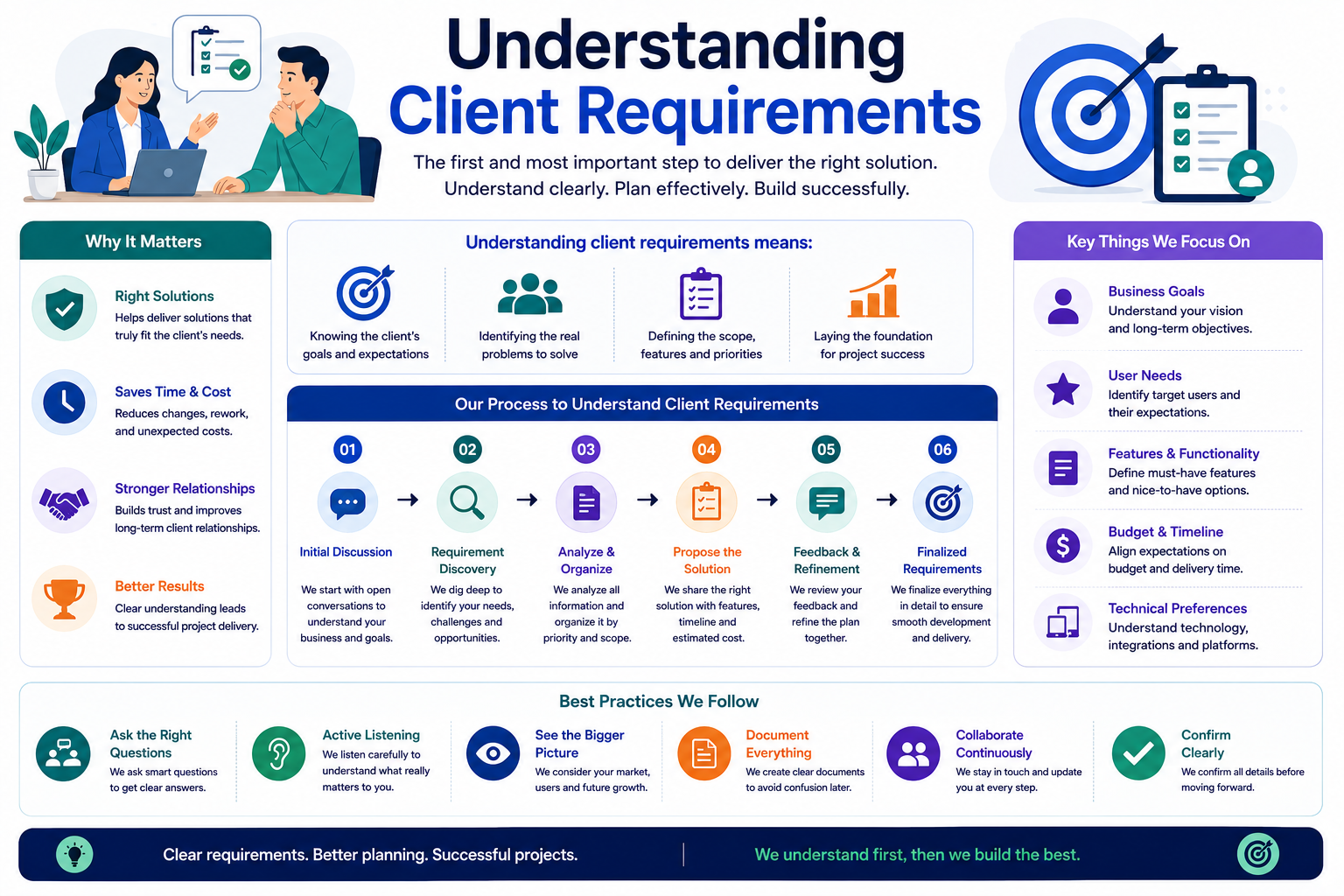
Every project begins with detailed discussions about business objectives, customer expectations, and website functionality. Understanding these requirements helps designers create layouts that support specific business goals.
Research includes competitor analysis, audience preferences, branding guidelines, and technical requirements. This planning stage establishes a strong foundation for both design and development.
Accurate project requirements reduce revisions while improving overall project quality.
Creating the Website Design in Figma
Designers begin building wireframes before developing complete visual layouts inside Figma. Every page includes carefully planned navigation, typography, colors, buttons, forms, and interactive elements.
Responsive versions are also designed to demonstrate how the website will appear on smartphones, tablets, and desktop computers. Interactive prototypes allow clients to experience user journeys before development begins.
Complete visual approval ensures everyone understands the final website before coding starts.
Design Handoff to Developers
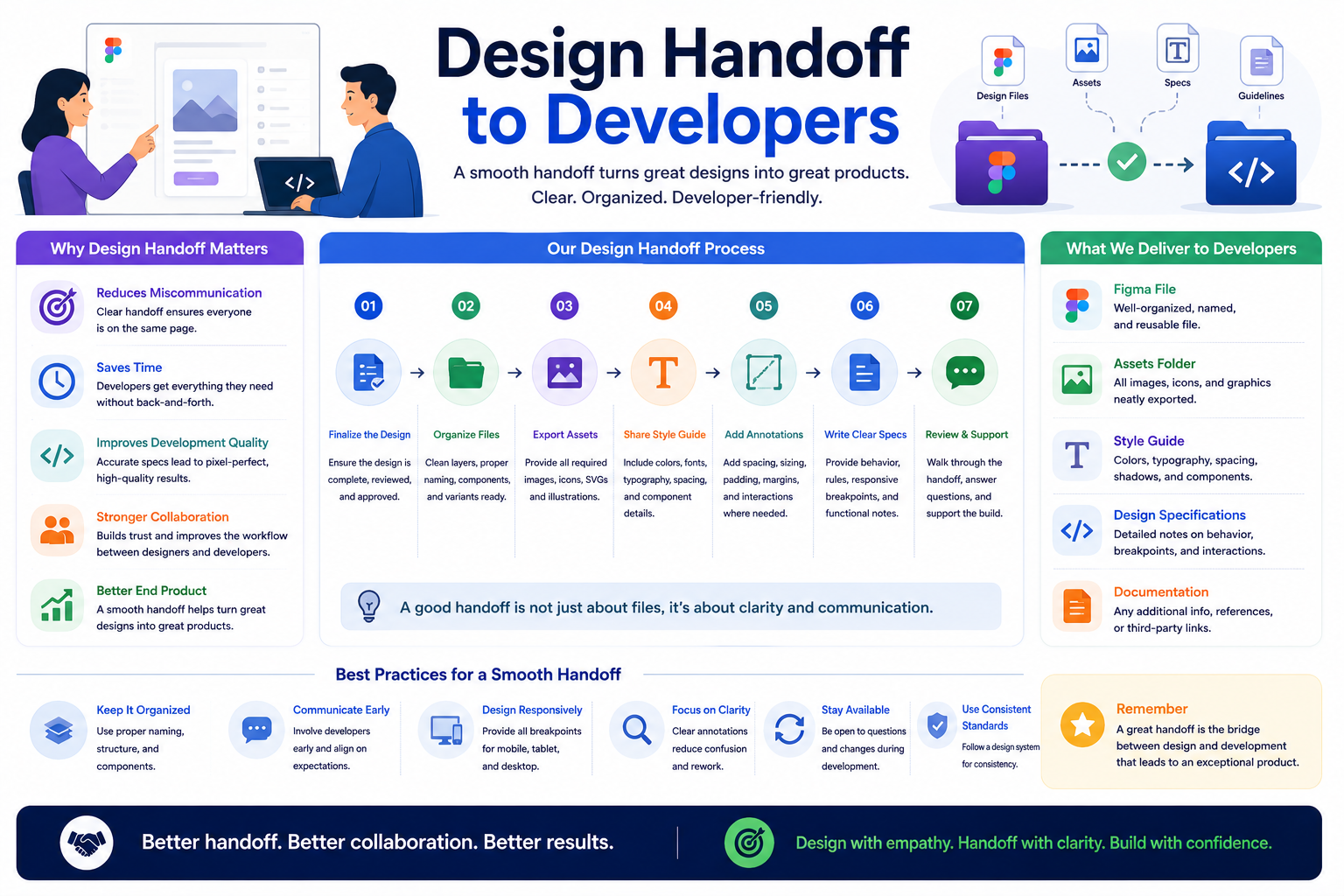
Once the design receives client approval, developers begin the design handoff process. Figma provides detailed measurements, spacing values, typography settings, color codes, icons, and exported design assets.
Developers use these specifications to recreate the approved design accurately during frontend development. Clear documentation improves consistency while reducing communication errors.
A professional design handoff keeps development organized and efficient.
Building Reusable Components
Modern websites contain many repeated interface elements such as navigation menus, buttons, forms, cards, and footers. Developers convert these repeated elements into reusable components.
Component based development improves consistency across every page while simplifying future maintenance. Updates become easier because developers modify shared components instead of individual pages.
Reusable components also accelerate development without reducing quality.
Responsive Implementation
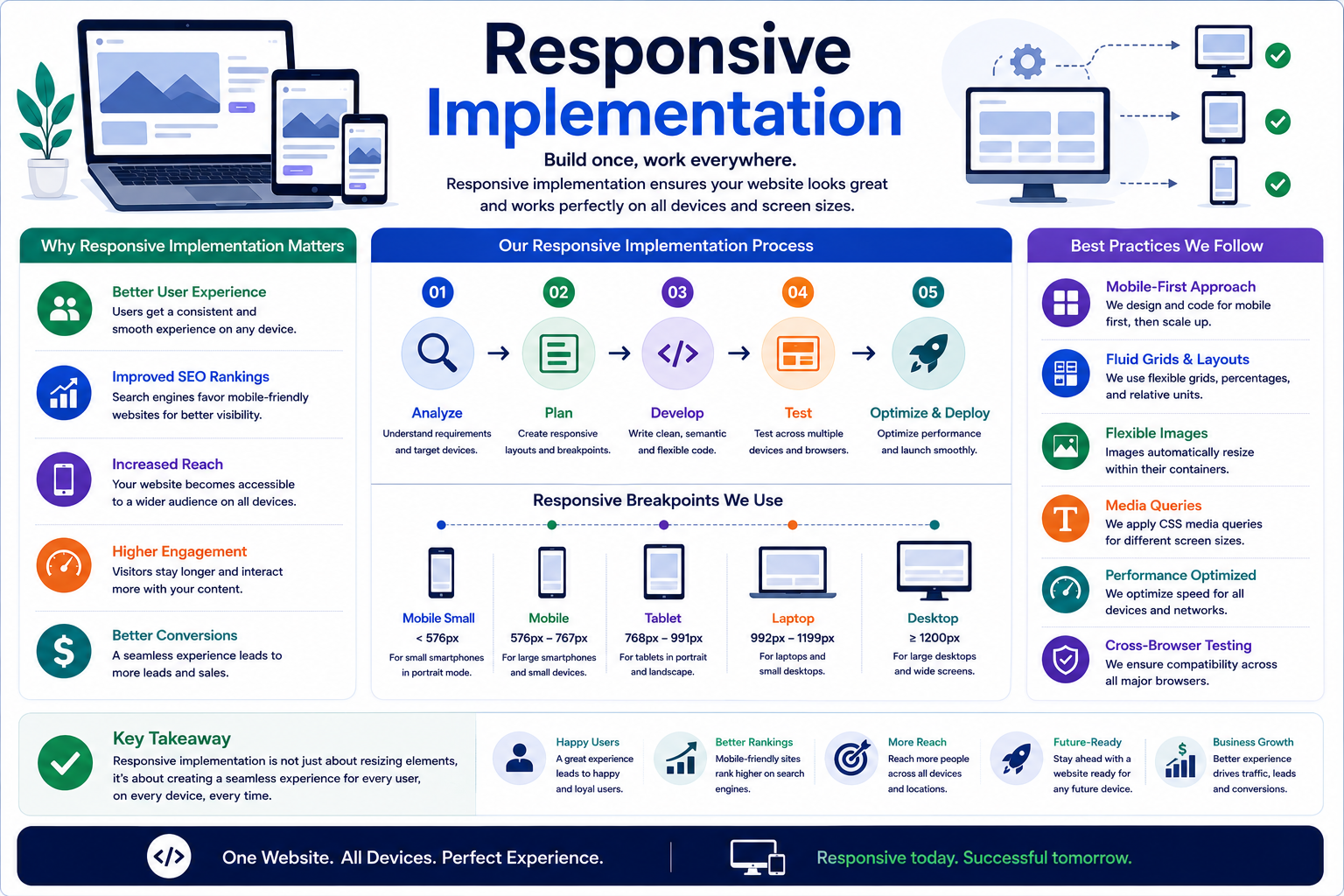
Visitors access websites using many different screen sizes and devices. Developers carefully implement responsive layouts so every page adapts automatically to available screen space.
Responsive implementation ensures text remains readable, navigation functions correctly, and interactive elements stay accessible across smartphones, tablets, laptops, and desktop computers.
This stage plays an essential role within the Figma to website development process because modern websites must perform consistently everywhere.
Front End Development
After preparing reusable components, developers begin writing frontend code using HTML, CSS, JavaScript, and appropriate development frameworks. Every visual detail from the approved Figma design is carefully implemented.
Animations, navigation, forms, responsive layouts, and interactive functionality are developed according to design specifications. Performance optimization also begins during this stage.
The frontend transforms static designs into fully functional user experiences.
Connecting the Back End
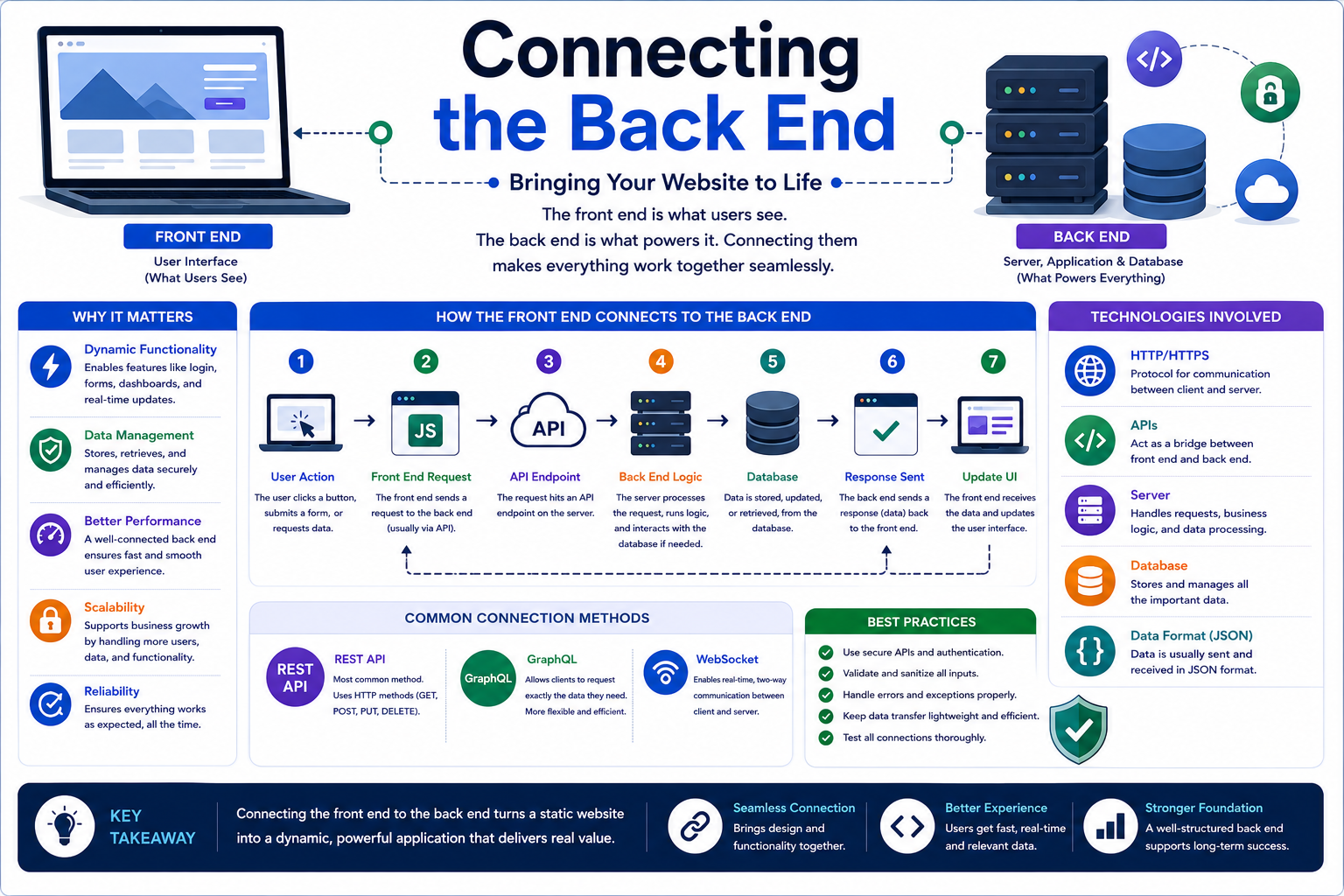
Many websites require backend functionality to support dynamic content, customer accounts, contact forms, ecommerce features, or content management systems. Frontend components are connected with secure backend services during development.
Developers integrate databases, APIs, authentication systems, and administrative dashboards according to project requirements. Every connection is tested to ensure reliable communication.
This integration transforms visual interfaces into complete business solutions.
Quality Assurance and Testing
Before launching any website, developers perform comprehensive quality assurance testing. Every page is reviewed carefully to ensure design accuracy and technical reliability.
Testing includes browser compatibility, responsive behavior, navigation, forms, loading performance, accessibility, and interactive functionality. Any issues identified during testing are corrected before deployment.
Quality assurance ensures the finished website matches the approved Figma design while delivering excellent user experiences.
Launching the Website
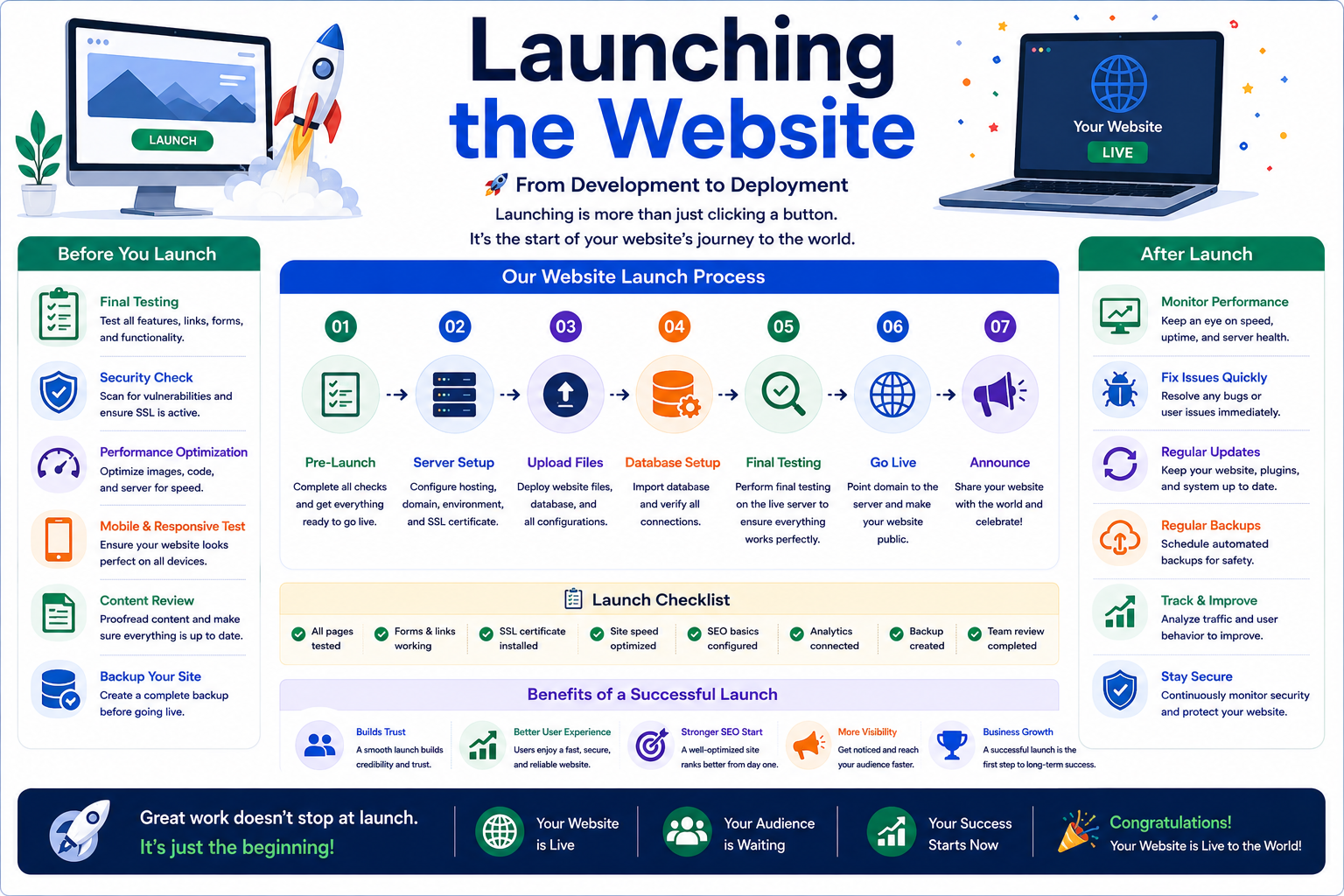
After successful testing, the website is deployed to the live hosting environment. Domain configuration, security settings, performance optimization, and final verification are completed before public release.
Developers perform additional checks after launch to confirm every feature operates correctly in the production environment. Businesses receive fully functional websites ready for customers.
A structured launch process minimizes technical risks while supporting smooth project completion.
How Abubakar Transforms Figma Designs into Websites
Abubakar follows a proven workflow that converts approved Figma designs into responsive, high performance websites. Every project begins with understanding business objectives before creating modern user focused designs.
After approval, reusable components, responsive layouts, frontend development, backend integration, and detailed testing ensure every design becomes a reliable digital solution. Performance, accessibility, and scalability remain priorities throughout the development process.
Clients receive websites that accurately reflect approved designs while supporting long term business growth.
Benefits of the Figma to Website Development Process
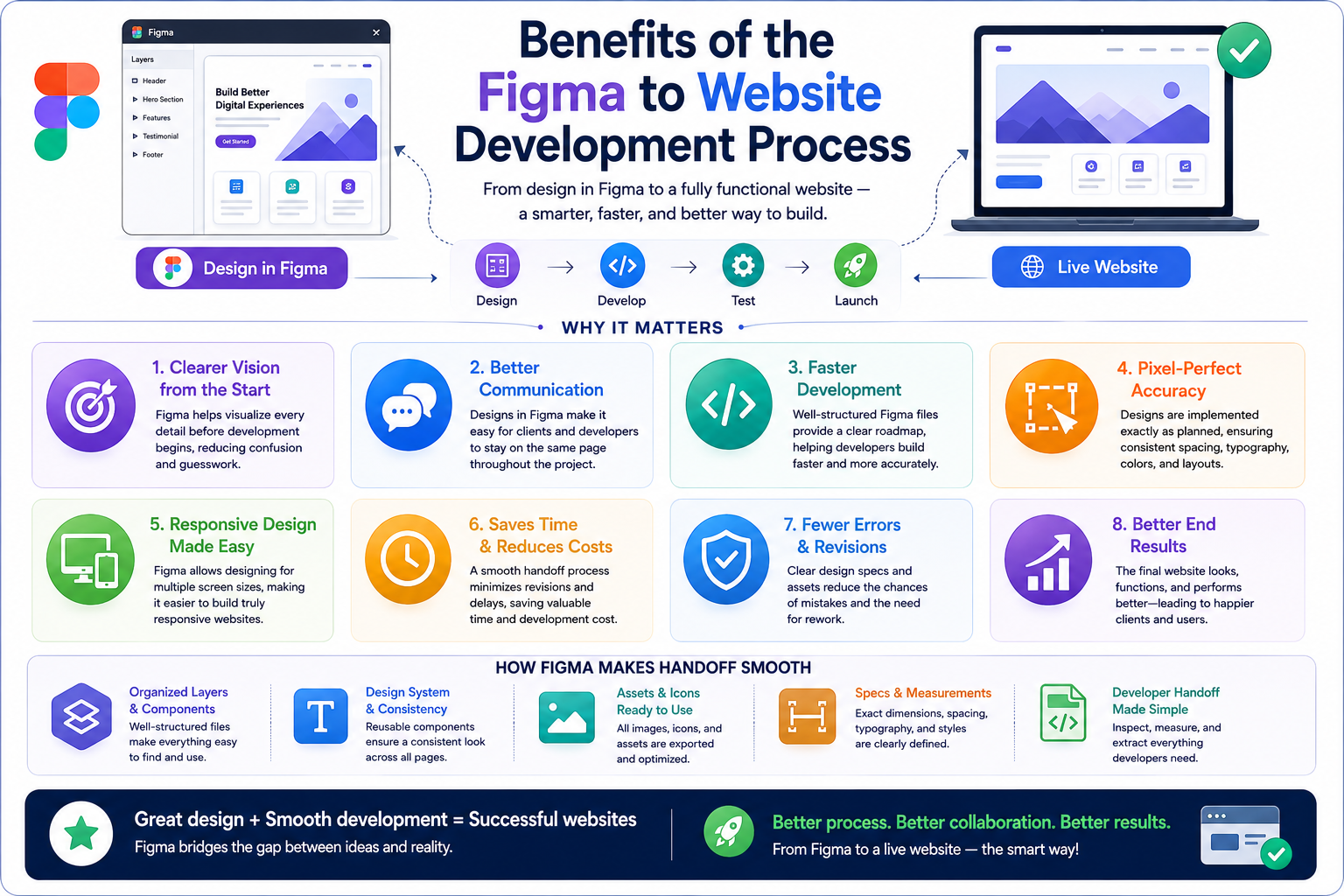
Businesses following a structured design and development workflow enjoy several important advantages.
- Improve communication through detailed visual planning.
- Reduce development errors with approved design specifications.
- Build consistent interfaces using reusable components.
- Deliver responsive websites across every device.
- Improve development efficiency with organized workflows.
- Increase customer satisfaction through quality assurance testing.
- Create scalable websites prepared for future growth.
These advantages demonstrate why the Figma to website development process remains essential for professional website development.
Conclusion
Professional websites begin with thoughtful planning and carefully designed visual layouts before development starts. The complete Figma to website development process transforms approved designs into responsive, functional, and reliable digital experiences through structured collaboration and technical expertise.
Businesses following this approach receive websites that accurately reflect their brand while providing excellent performance, usability, and long term scalability. Careful planning ensures every project achieves both visual quality and technical excellence.
Start with a Figma Design for Your Website
Ready to build a professional website with a structured design and development process? Abubakar transforms modern Figma designs into responsive, high performance websites that deliver exceptional user experiences and measurable business results. Whether you need a new business website or a complete redesign, every project begins with careful planning and professional design. Contact Abubakar today and start with a Figma design for your website.
Meta Title:Figma to Website Development Process | From Design to Live Website