
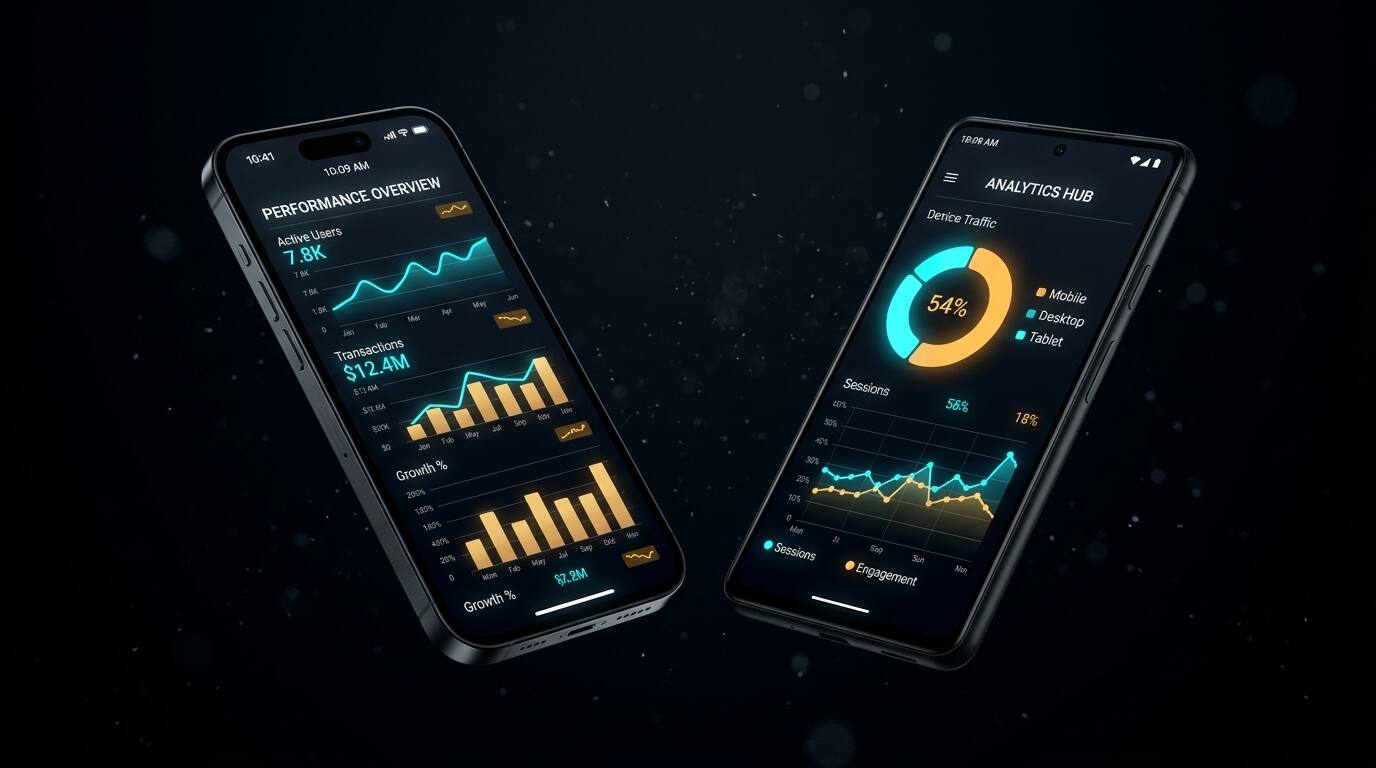
If you are building a mobile app in 2026, you have probably asked this question: should you hire a React Native developer, go fully native, or pick Flutter instead? React Native remains one of the most practical answers — one codebase, two app stores, and a massive hiring pool. But hiring the right React Native developer is where most founders and businesses go wrong.
This guide covers everything: what a good React Native developer actually does, what it costs to hire one in 2026, where to find them, how to vet them, and the red flags that signal you should walk away. I build cross-platform mobile apps with React Native and Flutter for clients through my development services, so this is written from real shipping experience — not theory. If your product also needs a web platform or API backend, the same vetting framework applies when you hire a full stack developer.
Why Hire a React Native Developer in 2026?
React Native lets you ship iOS and Android apps from a single JavaScript/TypeScript codebase. For most business apps — marketplaces, booking apps, dashboards, social apps, e-commerce — it delivers 90% of the native experience at roughly 60% of the cost of two native teams.
The framework is mature. Meta, Microsoft, Shopify, and thousands of startups run production React Native apps. The ecosystem (Expo, React Navigation, Reanimated, MMKV) has solved most of the pain points that plagued early versions. When you hire a React Native developer, you are buying speed to market without sacrificing app quality.
What Does a React Native Developer Actually Do?
A job title hides a wide skill range. Here is what a competent React Native developer should handle:
- Cross-platform UI development — building screens and components that feel native on both iOS and Android, handling platform differences (navigation patterns, permissions, gestures).
- State management and data flow — Redux, Zustand, or React Query for predictable, debuggable app state.
- Native integrations — camera, push notifications, biometrics, maps, payments (Stripe, Apple Pay, Google Pay), deep linking.
- API integration — connecting the app to REST or GraphQL backends, handling auth tokens, offline caching, and error states.
- App store deployment — certificates, provisioning profiles, TestFlight, Google Play Console, staged rollouts, and over-the-air updates via Expo EAS or CodePush.
- Performance tuning — profiling with Flipper or Hermes, fixing frame drops, reducing bundle size and startup time.
A senior developer also architects the project: folder structure, navigation strategy, CI/CD pipelines, and decisions like Expo managed workflow vs. bare React Native. That architecture work is what separates an app that scales from one that needs a rewrite in a year.
How Much Does It Cost to Hire a React Native Developer in 2026?
Rates vary wildly by region and engagement model. Here are realistic 2026 ranges:
Freelance React Native developers
- South Asia (Pakistan, India): $15–$40/hour — strong value; many senior developers with 5+ years of production experience.
- Eastern Europe: $35–$70/hour — good timezone overlap with Western Europe.
- Latin America: $30–$65/hour — good overlap with US timezones.
- US / Western Europe: $80–$150+/hour — premium rates, easiest communication.
Engagement models
- Fixed-scope MVP: $5,000–$25,000 for a typical startup MVP (auth, core screens, API integration, app store submission).
- Monthly retainer / dedicated developer: $2,500–$8,000/month offshore, $10,000–$18,000/month onshore.
- Full-time hire: $60,000–$120,000/year depending on market; plus recruiting costs and benefits.
- Agency: $15,000–$80,000+ per project — you pay for the team (developer + designer + QA + PM).
For most startups, a fixed-scope MVP with an experienced freelancer or small agency is the sweet spot. You can see typical project pricing structures on my pricing page. Avoid the cheapest bids — a $2,000 app that needs a $15,000 rewrite is the most expensive app you will ever buy.
Where to Hire React Native Developers
1. Freelance platforms
Upwork, Toptal, and Lemon.io have large React Native talent pools. Toptal screens rigorously but charges premium rates. Upwork gives you range — filter hard on completed mobile projects and client reviews, and always do a paid trial task.
2. Direct hire via portfolio sites
Many senior developers (myself included) take clients directly through their portfolio. You skip platform fees and talk to the person who will actually write your code. Check their shipped apps, not just their GitHub — a developer with apps live on both stores has survived App Store review, which is a real filter. You can contact me directly if you want to discuss a React Native project.
3. Agencies
Best when you need a full team or want a single accountable vendor. Ask who exactly will work on your project — some agencies sell senior talent and staff juniors.
4. Job boards and communities
For full-time roles: Wellfound (startups), YC Jobs, React Native Radio job board, and local tech communities. Hiring full-time makes sense once you have product-market fit and continuous mobile work.
How to Vet a React Native Developer (Step by Step)
- Check live apps first. Ask for App Store / Google Play links. Download them. Do they feel smooth? Do they handle offline gracefully? This tells you more than any resume.
- Review code quality. Ask for a GitHub repo or a code sample. Look for TypeScript usage, sensible component structure, and tests — not just that it "works."
- Ask architecture questions. "How would you structure navigation in an app with 30 screens and deep linking?" "How do you handle auth token refresh?" Strong developers answer with trade-offs; weak ones recite documentation.
- Paid trial task. A small, real task (2–4 hours, paid) — e.g., build a screen from a Figma design with API integration. Evaluate communication and code, not just output.
- Check native debugging ability. Ask how they debug a crash that only happens on a physical Android device. React Native developers who have never touched Xcode or Android Studio will struggle the moment something goes wrong at the native layer.
- Evaluate communication. Daily async updates, clear questions, honest estimates. The best technical developer who disappears for a week is worse than a good one who communicates.
Red Flags When Hiring
- No apps on the App Store or Google Play — only "demo projects" or tutorials.
- Cannot explain how the React Native bridge / Hermes engine works at a basic level.
- Quotes a complex app in days without asking a single clarifying question.
- Only knows Expo managed workflow and panics at the words "native module."
- No questions about your backend, your users, or your success metrics — they just want the spec.
- Unwilling to do a small paid trial.
React Native vs Flutter vs Fully Native
Quick decision framework:
- React Native — best if your team knows JavaScript/TypeScript, you need to ship fast on both platforms, or you want the largest hiring pool.
- Flutter — best for highly custom UIs and animations; Dart is less common so hiring is slightly harder.
- Fully native (Swift + Kotlin) — best for performance-critical apps (games, video editing, AR) or when you need day-one access to every new OS feature.
For roughly 80% of business apps, React Native is the right economic choice. I work in both React Native and Flutter — if you are unsure which fits, ask me and I will give you an honest recommendation, even if the answer is "you don't need me."
Engagement Models That Work
- Fixed-scope MVP (recommended for startups): defined screens, defined integrations, fixed price, 4–8 weeks. You know exactly what you get and what it costs.
- Monthly dedicated developer: best post-launch for iteration, new features, and maintenance.
- Hourly: only for small, well-defined tasks — hourly billing on vague scopes is how budgets die.
- Equity / rev-share: experienced developers rarely accept this from unproven founders. If someone senior accepts equity-only, ask why.
Whatever model you choose, insist on: source code in your repository from day one, weekly demos, and a written scope. These three things prevent 90% of outsourcing disasters.
How Long Does It Take to Build a React Native App?
Timeline expectations are where most hiring conversations go wrong, so here are honest 2026 benchmarks from real projects:
- Simple MVP (5–10 screens, auth, basic API integration): 4–6 weeks with one experienced developer.
- Standard startup app (15–25 screens, payments, push notifications, maps or chat): 8–12 weeks.
- Complex platform (marketplace with two user roles, real-time features, admin panel): 3–6 months with a small team.
These assume designs are ready. If you need UI/UX design too, add 2–4 weeks. Anyone promising a full marketplace app in "2 weeks" is either underestimating wildly or planning to deliver something you will throw away. A good React Native developer will push back on unrealistic timelines — that pushback is a sign of experience, not laziness.
Final Checklist Before You Hire
- ☐ You have seen at least 2 live apps they built (downloaded and tested).
- ☐ They completed a small paid trial to your satisfaction.
- ☐ You discussed architecture, not just screens.
- ☐ Source code ownership and repository access are agreed in writing.
- ☐ There is a written scope with milestones and payment tied to delivery.
- ☐ You have a plan for post-launch maintenance (who fixes bugs in month 3?).
Hiring a React Native developer is a high-leverage decision — the right person ships your app in weeks, the wrong one costs you months and a rewrite. Take vetting seriously, pay for quality, and you will end up with an app your users love.
If you want to skip the vetting lottery: I build React Native and Flutter apps for clients with fixed scopes and fixed prices. Tell me about your app idea — I will give you an honest estimate and timeline within 24 hours. You can also browse all development services or check pricing to see typical project ranges.