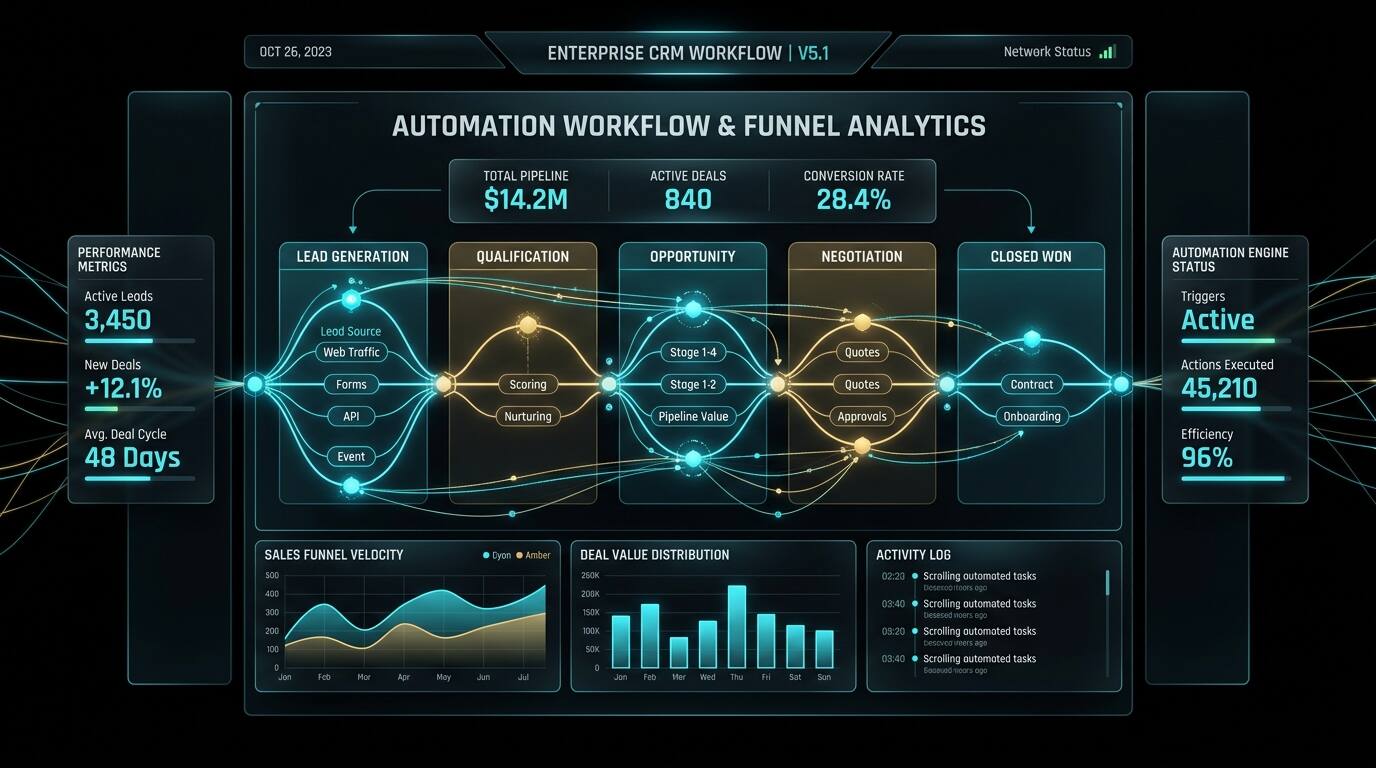

A clinic's phone is its front door, and for most clinics it is only half open. The lines are busy during morning surgery hours, unanswered at lunch, and silent after closing — exactly when patients decide whether to book, reschedule, or call the practice down the road. An AI voice agent for clinics is built to close that gap: a voice AI that answers the clinic phone on the first ring, books and reschedules appointments against the real calendar, sends reminders, answers routine administrative questions, and hands anything clinical or urgent to a human immediately.
I build AI voice agents for service businesses through my development services, including appointment-led practices where the booking is the product. This guide covers what a clinic voice agent actually does on a live patient call, where it must stop and escalate, what it costs in 2026, and how to deploy one without annoying patients or creating a compliance headache. For the broader picture, start with my AI voice agent guide for small business and my guide to AI appointment booking agents.
What an AI Voice Agent Does on a Clinic Call
A patient calls at 7:20 in the evening. The agent answers with the clinic's name, asks what they need, and understands a reply like "I need to move my Thursday blood test to next week" without making them press 1 for appointments and 2 for anything else. From there it does one of five things, based on rules the clinic sets in advance.
First, it books. It checks live availability for the right clinician, the right appointment type, and the right duration — a 15-minute follow-up is not a 45-minute new-patient assessment — offers the nearest alternative when the requested slot is full, and reads the booking back before confirming it. Second, it reschedules and cancels, updating the calendar in the same call so a freed slot becomes bookable again instead of sitting empty. Third, it answers routine administrative questions from the clinic's own knowledge base: opening hours, location and parking, whether new patients are being taken, what to bring, and how to prepare for a test. Fourth, it runs reminder and recall calls: confirming tomorrow's appointments, chasing unconfirmed bookings, and inviting patients due for a follow-up. Fifth, and most important, it escalates — instantly, with the conversation summary attached — whenever the call turns clinical, urgent, or emotional.
That fifth job is the one that decides whether a clinic deployment is safe. A patient describing chest pain, heavy bleeding, a bad reaction to medication, or a child who is very unwell must reach a human or an emergency service in seconds, not after a polite conversation. A good deployment defines the escalation list before launch: emergencies, symptoms, medication questions, complaints, anything involving a vulnerable patient, and any caller who asks twice for a person. The agent never diagnoses, never advises on treatment, and never guesses at a clinical answer. If it cannot answer from the approved knowledge base, it says so and transfers.
Why Clinics Lose More Bookings Than They Think
Most clinics underestimate missed calls because missed calls leave no record. A busy waiting room looks like success, but every unanswered call during a consultation, a procedure, or a lunch break is a patient who may book elsewhere and never call back. Calls spike exactly when staff are least available: Monday mornings, the hour after a clinic sends out recall messages, evenings, and weekends, when next week's appointments are being made.
The honest test for your own clinic is simple: count your missed calls for two weeks, and count how many of those callers ever book. If your phone system cannot tell you the first number, that gap alone is costing you appointments you will never see in a report. Vendor case studies will happily quote recovered bookings and hours saved — treat those as vendor numbers, not promises. Your own missed-call count is the only number that matters for the buying decision.
The second leak is subtler. Even calls that do get answered often end badly when reception staff are rushed: a wrong date written down, a phone number misheard over waiting-room noise, a preparation instruction half-remembered. A voice agent does not get rushed, does not mishear a number because a machine is running, and reads every booking back before confirming it. Consistency is the product here, not novelty.
The Calls a Clinic Agent Should — and Should Not — Handle
Draw the line before you buy anything, because no tool is equally safe at everything.
Handle with confidence. New bookings, reschedules, cancellations, appointment confirmations, opening hours, directions, parking, new-patient registration steps, insurance or payment process questions where the answer is administrative, and pre-appointment preparation instructions that the clinic has approved word for word.
Handle only with a human in the loop. Anything involving a patient's existing condition, test results, medication, or treatment plan. The agent can take a detailed message and book a clinician callback, but it must not interpret or advise. The same applies to complaints: take the details accurately, apologise for the experience without admitting fault, and get a senior staff member to call back the same day.
Never handle. Emergencies, symptoms, triage, diagnosis, and anything where a wrong answer could harm the patient. These go straight to a human or to emergency services, with no attempt at a helpful answer first. If a vendor tells you their agent can triage patients, ask to see the clinical governance behind that claim — and ask your own clinical lead before believing it.
Reminders and No-Shows: Where the Money Actually Is
For many clinics, the biggest return from a voice agent is not new bookings at all — it is fewer empty chairs. A no-show wastes a clinician's time that cannot be recovered, and a late cancellation that nobody rebooks wastes it twice. An agent that confirms tomorrow's appointments by call or message, chases unconfirmed bookings the day before, and immediately offers a cancelled slot to the next patient on the waiting list turns dead time back into appointments.
The workflow that works is boring and specific. Confirm 48 hours out, remind 24 hours out, and call — not just text — the patients who have not confirmed by the morning of the appointment. When a cancellation comes in, the agent offers that slot to waitlisted patients in order, rather than leaving it to whoever happens to call next. Every confirmation, cancellation, and rebooking lands in the clinic system in real time, so the front desk sees one true schedule instead of reconciling phone notes at the end of the day.
One caution: reminder calls must respect the patient's preferences. Some patients want a call, some want a text, and some want neither after a certain hour. Let patients choose at booking, record the choice, and honour it. An agent that calls a patient at 9pm about a routine check-up will cost you more goodwill than the appointment was worth.
Privacy and Compliance: The Questions to Ask Before Launch
A clinic phone line handles sensitive information by definition, so a voice agent deployment needs more care than a restaurant or salon deployment. Ask these questions before you sign anything, and get the answers in writing.
Where are call recordings and transcripts stored, for how long, and who can access them? Is patient-identifiable information separated from training data, and is it ever used to train a vendor's models? What happens when a patient asks for their call recording to be deleted? Which data-protection rules apply to your patients — HIPAA in the US, GDPR and local health-data rules elsewhere — and does the vendor's setup actually meet them, or just claim to? How does the agent verify a caller's identity before discussing an existing appointment, and what does it do when verification fails?
The practical answers are usually straightforward: store the minimum necessary, keep transcripts in the clinic's own system where possible, never train models on patient calls, verify identity with at least two pieces of information before discussing an appointment, and fall back to a human whenever verification is uncertain. If a vendor cannot answer these questions clearly, that is your answer about the vendor.
What an AI Voice Agent for Clinics Costs in 2026
Pricing falls into two buckets, and the right one depends on how much of the clinic's real workflow the agent must touch.
Off-the-shelf voice reception tools typically charge a monthly subscription plus per-minute or per-call usage, and they work best for clinics whose needs stop at answering, booking, and reminders on a standard calendar. Expect a modest monthly fee and usage on top; the trade-off is limited customisation — the agent follows the vendor's script, connects to the vendor's integrations, and escalates the vendor's way.
A custom build costs more up front but is wired into the clinic's actual systems: its practice management software, its calendar rules, its appointment types and durations, its escalation list, and its reminder preferences. You can see typical project pricing structures on my pricing page. The custom route makes sense when the clinic has multiple locations, complex appointment types, specific compliance requirements, or a booking workflow that off-the-shelf tools keep getting wrong. For a single-location clinic with simple bookings, start with a subscription tool and measure missed calls before committing to a build.
Whichever route you take, budget for the unglamorous parts: writing and approving the knowledge base, defining the escalation list with a clinician, testing with real clinic staff playing difficult callers, and reviewing the first month of transcripts. The software is the cheap part. The clinical sign-off is the work that makes it safe.
How to Deploy Without Annoying Patients
Patients will forgive an AI voice that is fast, accurate, and honest about what it is. They will not forgive one that pretends to be human, traps them in a loop, or wastes their time. Five rules cover most of it.
First, say it is an automated assistant in the first sentence, and offer a human at any point — "say 'speak to reception' at any time" costs nothing and saves every frustrated caller. Second, answer on the first ring and keep responses short; patients calling a clinic are often anxious, and long speeches make anxiety worse. Third, test with the clinic's hardest callers before launch: the patient who talks over the agent, the one with a strong accent, the one who changes their mind mid-booking, and the one who is upset. Fourth, review transcripts weekly for the first month and fix the knowledge base where the agent hesitated or guessed. Fifth, keep a human fallback that actually works — an agent that transfers to a phone nobody answers is worse than a voicemail box.
Roll out in stages. Start on overflow — the calls that come in when every line is busy — so no patient waits on hold while staff finish with the person in front of them. Then extend to after-hours, then to full coverage once the transcripts prove the agent handles the clinic's real calls cleanly. Clinics that launch everywhere on day one spend their first month apologising; clinics that stage the rollout spend it improving.
What to Ask a Vendor — or a Developer — Before You Commit
Ask for a live demo on your own appointment types, not a scripted happy path: a fully booked week, a double-booked clinician, a patient who wants to move three appointments at once, and a caller describing symptoms. Ask how the agent handles a caller who asks twice for a person. Ask where transcripts live and how long they are kept. Ask what happens when the system goes down mid-call — does the caller get a human, a callback, or silence? And ask for two clinics you can call as references, ideally one similar in size to yours.
If you want to discuss a voice agent for your clinic, contact me directly — I build these systems for appointment-led businesses, wired into real calendars and practice workflows, and I will tell you honestly whether a subscription tool or a custom build fits your clinic better. You can also compare the restaurant version of this deployment in my AI voice agent guide for restaurants, and the general receptionist picture in my AI receptionist guide for small business.
Final Word
A clinic voice agent is not a gimmick and it is not a replacement for reception staff. It is a front door that stays open when the clinic is busy, closed, or overwhelmed — booking the appointments that would otherwise be lost, reminding the patients who would otherwise forget, and getting the urgent and clinical calls to a human fast. Deployed with a clear escalation list, clinician sign-off, and honest privacy answers, it gives patients a better experience and gives staff their day back. Deployed without those, it is just a faster way to annoy the people you exist to help.